
Reviewed · BELFAST TROUBLES AND MURAL TOURS
IRA Troubles Conflict Private Tour Museum Graves Murals and Political Analysis
Belfast’s past is written on its walls. This three-hour private tour takes you into the Falls Road, Shankill Road, peace lines, Milltown Cemetery, and a normally closed Irish Republican museum, using political murals and memorials to explain The Troubles. I like the access to places many city tours skip, and I like the freedom to ask questions in a private vehicle. The main thing to consider is the clear Republican viewpoint, which may feel incomplete if you want equal treatment of Unionist and British arguments.
The experience costs $255.50 per person, a serious price for three hours. Still, private transportation, hotel pickup from a central meeting point, a customized route, and access to a private collection give it more substance than a basic mural drive. Guides named Barry, Joe, Paula, Brendan, Ciarán, Kieran, and Anton have led this experience, so the tone and storytelling may vary.
In This Review
- Key points before you book
- What this Belfast tour is really trying to do
- From Divis Street to the Peace Wall
- Shankill Road and the Loyalist side
- Clonard, Bombay Street, and the first peace lines
- Milltown Cemetery and Bobby Sands’s grave
- The private museum and objects from the conflict
- Bobby Sands, Ballymurphy, and Republican remembrance
- A three-hour route that packs in a lot
- Is $255.50 per person good value?
- Who should book this experience?
- Should you book the IRA Troubles Conflict Private Tour?
- FAQ
- How long does the tour last?
- What viewpoint does the guide present?
- Is the tour private?
- Is transportation included?
- Is hotel pickup available?
- Is airport pickup available?
- Can I visit the Irish Republican History Museum?
- Can I cancel for a full refund?
Key points before you book
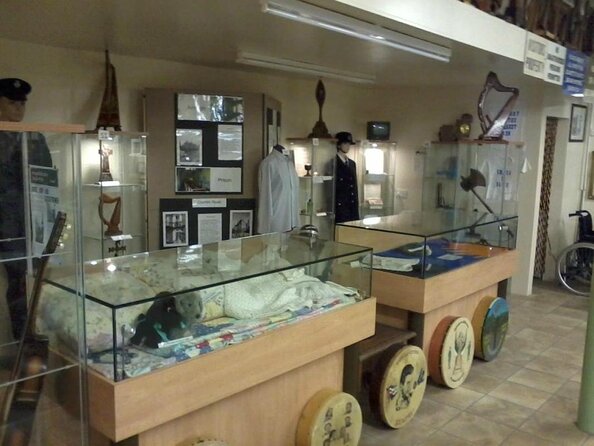
- Private museum access: The Eileen Hickey Irish Republican History Museum is usually open only Tuesday through Saturday, from 10 a.m. to 2 p.m.
- Republican viewpoint: The tour explains the conflict through Irish Republican history, including the IRA’s development and the peace process.
- Major Belfast interfaces: You visit the Falls Road, Shankill Road, Peace Wall, Clonard, Divis, and Ballymurphy.
- Memorials with emotional weight: Milltown Cemetery includes Bobby Sands’s grave and Republican burial plots, while Clonard honors local volunteers and civilians.
- Private vehicle and flexible questions: Your group travels alone, with transportation and navigation handled for you.
- Extra pickup charges: Central pickup is free from the Leonardo hotel meeting point, while cruise port, airport, and several other locations have different rules and fees.
What this Belfast tour is really trying to do
This is not a general Belfast sightseeing trip. It is a focused political and historical tour built around the Irish Republican experience of The Troubles, the period of conflict that began in 1969 and continued for roughly three decades.
That focus is stated plainly, which is helpful. You are not signing up for a supposedly neutral overview and then discovering halfway through that the guide has a strong political position. The tour explains how Republicans understood British rule, partition, civil rights protests, internment, prison protests, armed resistance, and the peace process.
I value that directness. Belfast’s history can become vague when guides smooth out every disagreement. Here, you are more likely to hear a firm interpretation, including accounts shaped by people who lived through the conflict. The guides described in the tour material have personal connections to Belfast and, in some cases, direct experience of the period.
That intimacy is also the tour’s main limitation. If your goal is a balanced account of Republican, Loyalist, British Army, and Unionist positions, this is not the best single choice. One four-star assessment specifically found the tour too one-sided because Loyalist arguments received little attention. The operator’s response confirms the point: the tour is intended to explain Republican history, not present both sides equally.
For a fuller picture, pair it with a tour that focuses on the Loyalist and Unionist communities. That is not a criticism of this experience. It is simply important to know what you are buying.
More political history tours in Belfast:
- A History of Terror – Belfast City Centre Walking Tour
★ 5.0 · 2,883 reviews - Belfast’s Political Mural Taxi Tour
★ 5.0 · 1,180 reviews - Belfast Troubles Tour: Walls and Bridges
★ 5.0 · 853 reviews
From Divis Street to the Peace Wall
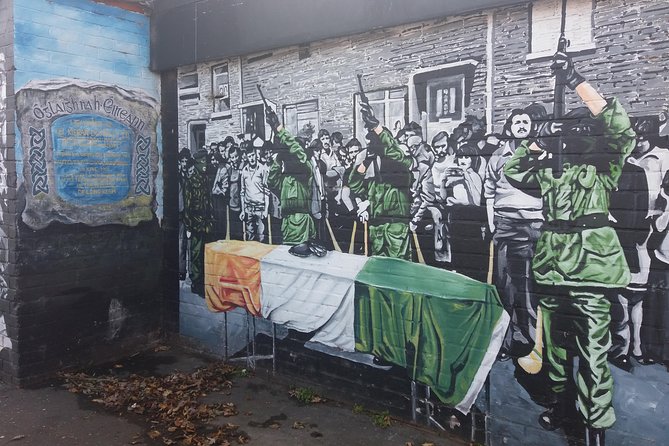
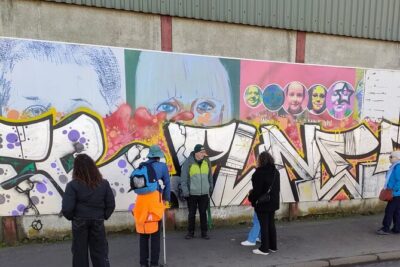
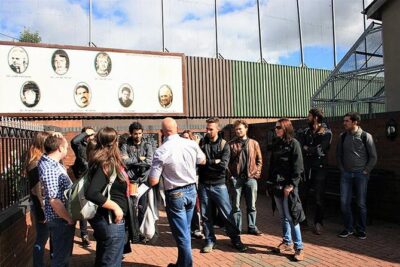
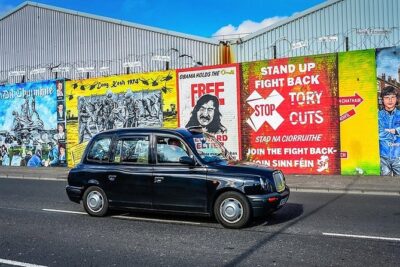
The tour begins around the International Mural Wall on Divis Street and the Falls Road. This is where the visual language of Belfast comes into play. Political murals here are not just decoration. They present ideas about Irish identity, British rule, imprisonment, hunger strikes, international struggles, and remembrance.
Your guide explains how the conflict began and how Republican politics changed over time. You will hear about former prisoners who painted or helped create murals, and you will see how public art became part of political communication.
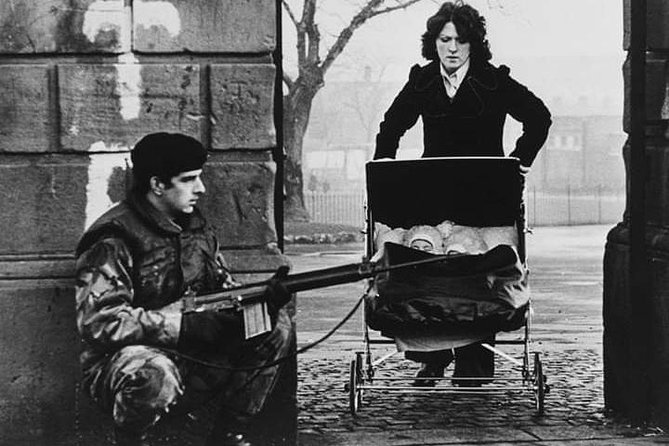
The Peace Wall is a short stop, but it carries a lot of meaning. These barriers separate mainly Republican and Nationalist Catholic districts from mainly Loyalist and Unionist Protestant districts. The walls were first built after sectarian violence in 1969 as a temporary way to keep communities apart.
They remained. Some grew longer, and more appeared even after the IRA ceasefire in 1994. You visit both sides of the wall, hear why it was built, and can sign your name or leave a message of peace. That small act may feel touristy, but it gives you a physical reminder that Belfast remains divided in ways that are not only historical.
The tour also passes the largest Peace Wall in Belfast, including the long barrier between the Falls Road and Shankill Road. You see the gates and separation points that can still close at night on some roads. I find this one of the most useful parts of the route because it shows that the peace process did not erase every physical sign of division.
Shankill Road and the Loyalist side
A visit to Shankill Road gives the tour a necessary change of setting. This is the heartland of Ulster Loyalism, with murals connected to groups such as the UDA, UFF, and UVF.
The guide explains how Loyalism developed and how paramilitary organizations operated during the conflict. You can photograph murals depicting masked men and weapons, though the subject matter is stark. The point is not to admire the imagery. It is to understand how each community used walls, flags, memorials, and symbols to mark territory and preserve its own account of the past.
Because the tour is Republican-focused, this section is more likely to explain Loyalism as part of the conflict from the Republican side than to give you a full Unionist political narrative. That distinction matters. You will see both communities, but you should not expect identical time or weight to be given to both.
Clonard, Bombay Street, and the first peace lines
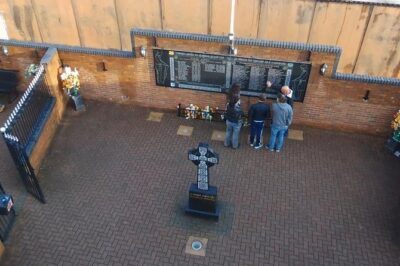
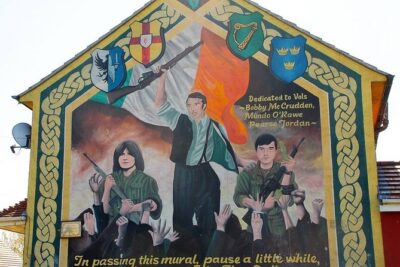
Clonard provides one of the tour’s strongest links between place and event. At the Clonard Martyrs Memorial Garden on Bombay Street, you see memorials to Republican volunteers, civilians, and Republican prisoners from the area.
The garden includes black iron gates, a red and black phoenix, Celtic crosses, plaques, benches, and long lists of names. The memorial language is openly Republican. It honors local sacrifice and resistance, while also remembering civilians killed by Loyalists and British forces.
Bombay Street has particular importance because much of it was burned during the violence of August 1969. The attacks forced Catholic residents from their homes and helped lead to the construction of the first peace walls.
This is not a quick photo stop in the usual sense. The memorial contains many names and inscriptions, so you will get more from it if you are willing to slow down and listen. One practical point comes from the route itself: the tour includes many stops, and some are only five or ten minutes. Clonard receives about 30 minutes, making it one of the places where the guide can explain the setting rather than simply point at a mural.
Clonard Monastery adds another layer. Located near the interface between the Falls and Shankill districts, it was connected with Catholic priests Alec Reid and Gerry Reynolds, both known for peace work. The monastery’s priests tried to protect local residents when violence broke out in 1969.
The monastery stop is short, but it helps you see that the story includes more than armed groups. Religious figures, residents, prisoners, families, and political organizers all shaped what happened next.
More museums in Belfast:
- Belfast Titanic Museum and Sighseeing Tour
★ 4.5 · 59 reviews - Titanic Museum and Whiskey Distillery Exploration with Tasting
★ 4.5 · 25 reviews - Belfast City Sightseeing Tour Including Titanic Museum | 6 Hours
★ 4.5 · 9 reviews - Saint Patrick Centre Exhibition experience
★ 4.5 · 33 reviews
Milltown Cemetery and Bobby Sands’s grave
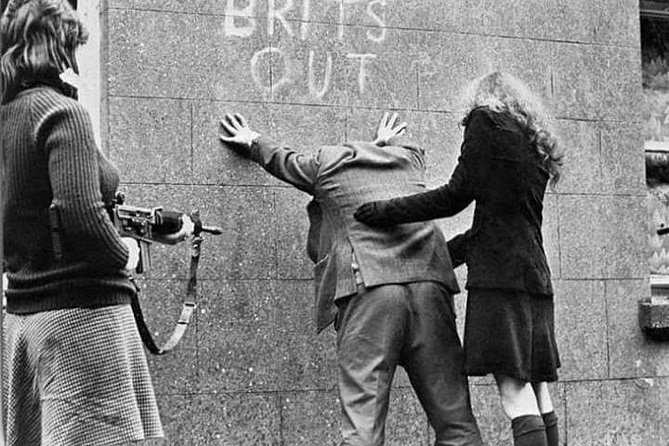
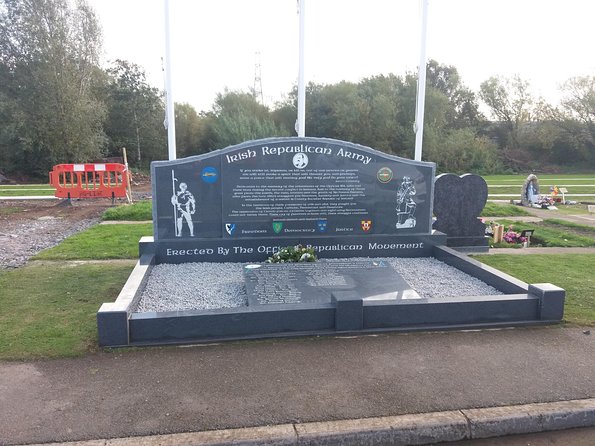
Milltown Cemetery is one of the most important stops, and it is also the point where the tour becomes especially solemn. You visit the Republican plots, including graves maintained by the National Graves Association, and see memorials connected to volunteers from different periods of Republican activity.
Bobby Sands’s grave is the best-known. Sands was a Provisional IRA member who died on hunger strike in 1981 while imprisoned at the Maze. He had been elected as a Member of Parliament during the protest and died after 66 days without food.
The tour places the hunger strike within the wider prison protests, including the blanket and dirty protests. You also learn about the other hunger strikers, with photographs of 12 of the 22 men who died during the 1981 strike shown at another memorial stop.
The Republican plot is not a neutral memorial space. It presents a clear political interpretation of those buried there. You should expect terms such as volunteer, patriot, and martyr, which reflect Republican commemorative language. People with an interest in political memory will find this valuable, while others may find the framing difficult.
The cemetery receives about 25 minutes. That is enough for a guided explanation, but possibly not enough if you want to read every name or spend quiet time at the graves. One assessment found that too much time was spent there, while other accounts describe the cemetery as one of the most moving parts of the experience. Your response will depend on how much memorial detail you want.
A practical advantage is the private format. You can ask why particular names matter, how Republican burial traditions developed, and how memory is used in present-day politics. The vehicle also means you do not have to navigate the separate districts yourself.
The private museum and objects from the conflict
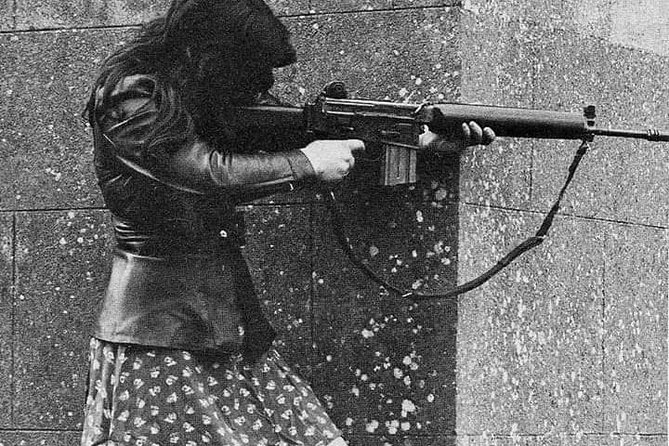
The Eileen Hickey Irish Republican History Museum is the tour’s most unusual feature. It is not normally open to the public in the same way as Belfast’s larger museums, so access gives the experience a more personal and less polished feel.
The museum covers resistance to British rule across centuries, not only the modern Troubles. The guide may introduce you to former prisoners who share their experiences. You can also see and handle plastic and rubber bullets used by British Crown forces, an object that brings the conflict down from political slogans to physical evidence.
The museum’s opening hours are limited to Tuesday through Saturday, 10 a.m. to 2 p.m. If it is closed, the tour substitutes a drive around Ballymurphy. This is important: museum access is not guaranteed at every departure time, so confirm the schedule before you book if this is the main reason you want the tour.
The museum was the highlight for at least one account of the experience, and I can understand why. Murals and memorials show public memory. A private collection can show the objects, documents, and personal material behind that memory. It also creates room for questions that are harder to fit into a standard city tour.
Bobby Sands, Ballymurphy, and Republican remembrance
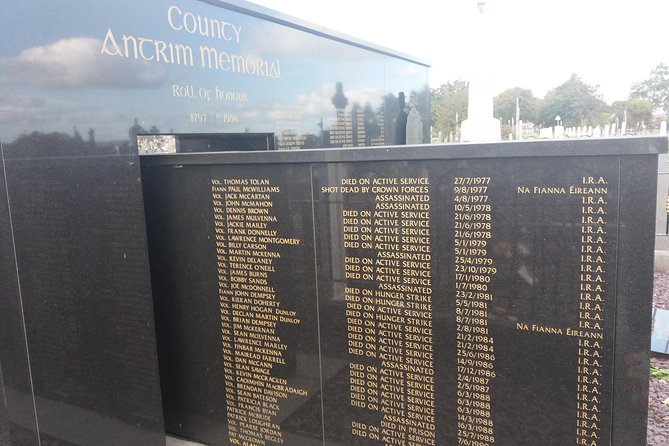
The route includes more than one Bobby Sands-related stop. You visit the iconic mural on the Falls Road and learn how the blanket and dirty protests led to the 1981 hunger strikes.
You also see the Second Battalion IRA Garden of Remembrance, linked with D Company, sometimes called The Dogs. The guide discusses the Battle of the Falls in 1970 and the Falls Road Massacre of 1920, along with local volunteers and the IRA’s Belfast Brigade.
Ballymurphy adds murals connected to the Great Famine and local Republican figures, including Jim Bryson and the image of his Big Louie machine gun. Divis Tower is another brief but striking stop. It overlooks the Falls and once housed a British Army sniper position and surveillance post, reportedly until 2005.
These stops show how Republican memory works at street level. The memorials honor individuals, but they also tell a larger story about occupation, resistance, neighborhood defense, and loss. The drawback is pace. Several stops last only five minutes, so you will see a lot from the vehicle but may not have time for long walks or careful photography at each site.
A three-hour route that packs in a lot
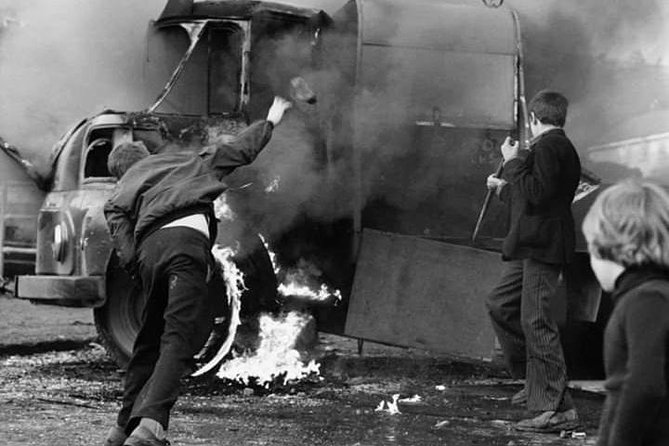
The advertised duration is approximately three hours, and the route covers a remarkable amount in that time. You move between murals, cemeteries, gardens, churches, memorials, interface areas, and museum space without having to arrange transport yourself.
Private transportation is a real advantage. You can leave the navigation to the driver, ask to pause for pictures, and steer the conversation toward the subjects that matter most to you. Several guide accounts describe the route being adjusted around questions and interests. That flexibility is one reason the experience can feel more like a private lesson than a fixed sightseeing circuit.
The group size is limited to your own party. That matters at places such as Milltown Cemetery and the memorial gardens, where a large group could make the visit feel loud or rushed.
Pickup is free from the central meeting point at the Leonardo hotel. Other central locations can cost extra, including the Titanic museum, Crumlin Road Gaol, Queen’s University, the Botanical Gardens, and the Ulster Museum. Lanyon train station, Dublin train arrivals, and St George’s Market also have extra pickup or drop-off charges.
Cruise passengers pay $25 each way for port pickup and drop-off. Airport pickup and drop-off are not offered. The tour also offers a luxury Mercedes V-Class upgrade for £25 when available, with leather reclining seats, electric doors, and privacy glass. These details are worth checking before booking because the base price does not cover every pickup arrangement.
Is $255.50 per person good value?
At $255.50 per person, this is expensive for a three-hour activity. A couple pays more than $500 before tips or special transport charges, so you should book it for the access and depth, not simply for a drive around Belfast.
The value improves if you care about the Republican viewpoint, want a private vehicle, and especially want the museum. You are paying for a dedicated guide, hotel transfer from the central meeting point, a route through several neighborhoods, and the ability to ask questions without a group of strangers waiting.
The price is harder to justify if you mainly want to see murals and Peace Walls. Belfast has other ways to view those landmarks, and this route often gives you only a few minutes at individual stops.
I would also factor in the guide. Barry receives especially strong praise for his historical knowledge, personal stories, humor, and ability to tailor the tour. Joe and Paula are also described as bringing personal experience and warmth, while Ciarán is praised for being punctual and friendly. Since guides can vary, the quality of your day may depend as much on who leads it as on the route itself.
Free cancellation is available up to 24 hours before the start time. Changes or cancellations inside that window are not accepted for a refund.
Who should book this experience?
I would choose this tour if you have already read about The Troubles and want to connect the events to real streets and neighborhoods. It also suits people interested in political murals, prison history, memorial culture, the IRA, the hunger strikes, and the continuing division of Belfast.
It is a good fit for a short Belfast stay because the vehicle covers ground quickly. Cruise passengers can also make use of it, provided they arrange the port fee and allow enough time around their ship schedule.
I would not make it your only Belfast history tour if you need a carefully balanced account of all sides. The operator is open about the Republican focus, and you should treat that as a central feature, not a minor detail.
Should you book the IRA Troubles Conflict Private Tour?
Book it if you want a focused, personal account of Belfast’s Republican history and value places that are not part of every standard city tour. The private museum, Milltown Cemetery, Clonard memorials, and conversations with a guide who may have lived through the conflict give the experience real weight.
Skip it if you want a neutral overview, dislike memorial-heavy visits, or mainly want quick photographs of murals. At this price, the tour needs to match your interests closely.
For the right person, it can be the most memorable history experience of a Belfast visit. Go ready to listen, ask hard questions, and recognize that every wall and memorial presents a point of view.
FAQ
How long does the tour last?
The tour lasts approximately three hours.
What viewpoint does the guide present?
The tour presents The Troubles and Irish Republican history from an Irish Republican perspective. It discusses Loyalist and British forces as participants in the conflict, but it is not designed as an equal presentation of every political position.
Is the tour private?
Yes. Only your group participates in the private activity.
Is transportation included?
Yes. Private transportation in an air-conditioned vehicle is included, along with navigation and round-trip transfer from the central meeting point at the Leonardo hotel.
Is hotel pickup available?
Free pickup is offered from the central meeting location at the Leonardo hotel. Other locations may carry extra fees, including some Belfast attractions and train stations.
Is airport pickup available?
No. Airport pickup and drop-off are not offered.
Can I visit the Irish Republican History Museum?
The museum is open only from 10 a.m. to 2 p.m., Tuesday through Saturday. If it is closed, the tour substitutes a drive around Ballymurphy.
Can I cancel for a full refund?
Yes, if you cancel at least 24 hours before the experience begins. Cancellations or changes made less than 24 hours before the start time are not accepted for a refund.
Just added in Belfast
- Falls road Murals Walking Tour with former prisoners★ 5.0 · 19 reviews
- Private Half Day Winter Magic in the Antrim Glens★ 5.0 · 2 reviews
- Belfast’s Titanic Quarter: A Self-Guided Audio Tour★ 5.0 · 6 reviews
- The Troubles and iconic award winning taxi 2hr private cab tour★ 5.0 · 28 reviews
- Titanic Eastside Bike Tour★ 5.0 · 9 reviews
- The Single Cask Whiskey Experience★ 5.0 · 6 reviews
- Titanic Maritime Walking Tour★ 5.0 · 23 reviews
- The Giants Causeway Tour★ 5.0 · 1 review
Belfast Troubles and Mural Tours, compared.
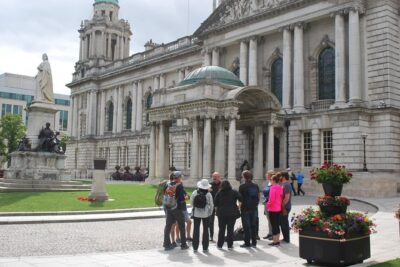
A History of Terror – Belfast City Centre Walking Tour
Read our review →
Belfast Political Tour-Conflicting Stories Walking Tour
Read our review →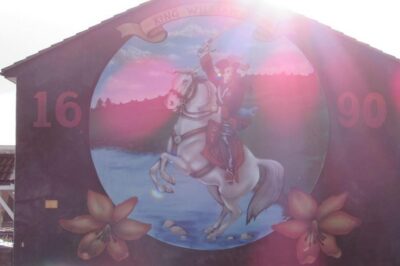
2 Hour Private Belfast Taxi Cab Tour of Troubles & Peace walls
Read our review →Browse the lists this tour appears in