
Reviewed · BELFAST TROUBLES AND MURAL TOURS
Belfast Political Tour-Conflicting Stories Walking Tour
History gets personal here. This three-hour walk crosses Belfast’s political divide between the Falls and Shankill Roads, pairing local guides from opposing communities with murals, memorials, and places marked by violence. I like the honest two-guide format, and I like that former political prisoners explain what the conflict meant in daily life, not just in textbooks.
The strongest feature is the contrast between the nationalist and loyalist accounts. The main drawback is the setting: you spend the whole tour outdoors beside busy roads, often in wind, and the subject can be painful or politically charged. Wear warmer clothes than you think you need, and bring sturdy shoes.
In This Review
- Key Points Before You Book
- Why This Belfast Walking Tour Feels Different
- Starting at Divis Tower and Entering West Belfast
- Bobby Sands, the International Wall, and Bombay Street
- Crossing the Peace Wall
- Shankill Road and the Loyalist Story
- The Value of Former Prisoners as Guides
- Walking Conditions, Weather, and Group Comfort
- Is $36.05 Good Value?
- Who Will Get the Most From This Walk?
- Getting Back to Central Belfast
- Should You Book the Conflicting Stories Tour?
- FAQ
- How long does the Belfast Political Tour last?
- Where does the tour start?
- Where does the tour end?
- How far is the endpoint from Belfast city center?
- What areas does the tour visit?
- Is the tour offered in English?
- How many people can join the tour?
- Can I cancel for a full refund?
Key Points Before You Book
- Two guides, two lived perspectives: The Falls Road and Shankill Road sections are presented from different political and community viewpoints.
- Bobby Sands and the International Wall: The nationalist section includes major murals, Bombay Street, and the D Company memorial garden.
- Shankill Road memorials: The loyalist section covers the Bayardo bombing, UVF memorial, Frizzells Fish Shop bombing, and Somme Memorial.
- Three hours on foot: The route is mostly a moderate walk with frequent stops, but there is little shelter from wind or rain.
- Personal stories matter most: Guides such as Paul, Ian, Jack, and Mark have been praised for connecting public events to their own lives.
- Good value at $36.05: A small group of up to 20 people gets a long, serious introduction to Belfast’s recent past.
Why This Belfast Walking Tour Feels Different
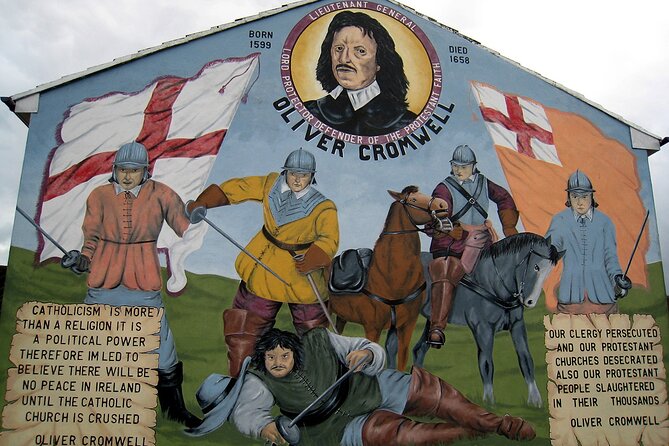
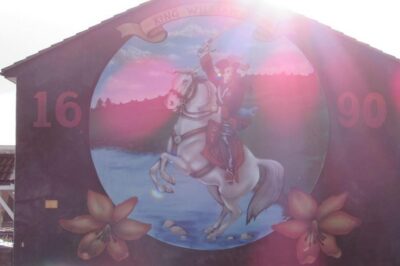
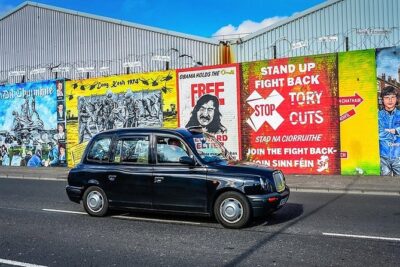
Belfast’s murals are easy to photograph and easy to misunderstand. A red, white, and blue wall or a republican tribute can look like simple street art if you do not know who it honors, what event it recalls, or why the image still matters.
This walk gives you that missing context. You move through West Belfast on foot, stopping at memorials and murals while guides explain the political ideas behind them. The important part is not only the information. It is the fact that the two halves are presented by people with personal connections to the conflict.
The experience is organized as two roughly 90-minute sections. The first takes place in the nationalist area around the Falls Road. The second moves along the loyalist Shankill Road. Between them is the peace wall, a physical barrier that remains part of daily life.
That structure gives you a useful way to understand Belfast. You do not hear one polished version of events and leave thinking the past was simple. You hear competing memories, grief, anger, loyalty, and a clear desire for peace.
Several guides are named in the feedback, including Paul, Ian, Jack, and Mark. The exact pair can vary, but the best guides share a direct connection to Belfast and speak from experience. That can make the tour moving and vivid. It can also mean that political views come through strongly, so you should arrive ready to listen rather than expecting a neutral lecture.
More political history tours in Belfast:
- A History of Terror – Belfast City Centre Walking Tour
★ 5.0 · 2,883 reviews - Belfast’s Political Mural Taxi Tour
★ 5.0 · 1,180 reviews - Belfast Troubles Tour: Walls and Bridges
★ 5.0 · 853 reviews
Starting at Divis Tower and Entering West Belfast
The meeting point is Divis Tower, Belfast BT12 4QA. From here, the walk begins in the Falls area and heads toward the political murals and memorials of West Belfast.
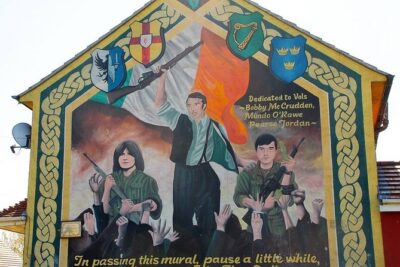
This is not a sightseeing stroll in the usual sense. The streets are living neighborhoods, and the images on the walls are tied to identity, loss, and political memory. You might see a mural honoring a republican volunteer, an international solidarity message, or a memorial to people killed during the conflict.
The guide’s explanation is what turns these sights into something more than a collection of painted walls. You learn how the nationalist community remembers the Troubles, how the British state and local security forces are viewed, and why certain names and dates remain important.
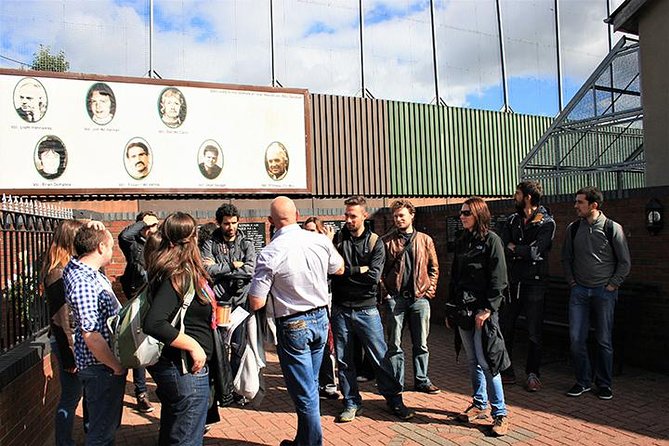
Expect frequent pauses. The group may gather on a pavement while the guide points out a mural or explains an event. One useful practical concern is sound. Some sections are beside busy streets with buses, trucks, and traffic, and one poor experience involved a muffled microphone. Stay close enough to hear, and speak up if the group is spread out.
The group can reach 20 people. That is still small enough to follow a guide through the area, but it is large enough for the back of the group to lose some words in traffic. Standing near the guide makes a real difference.
Bobby Sands, the International Wall, and Bombay Street
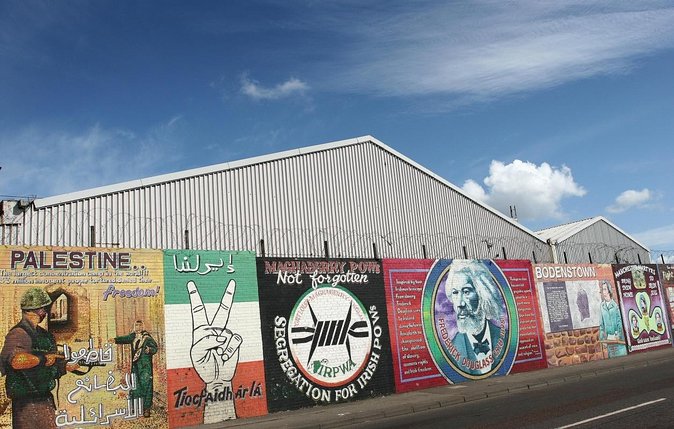
The first 90-minute section includes the International Wall, the Bobby Sands mural, the D Company memorial garden, and Bombay Street.
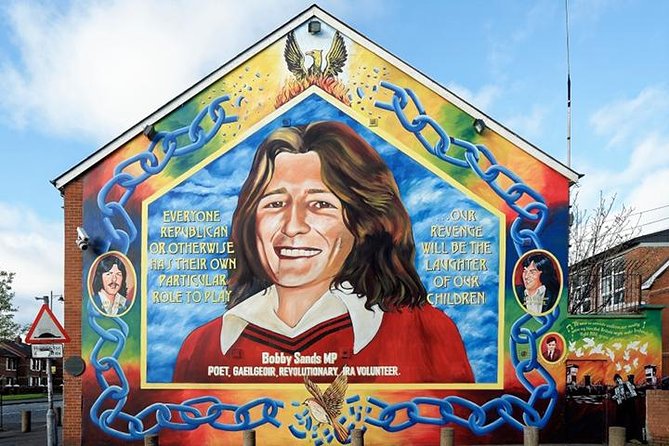
The Bobby Sands mural is one of Belfast’s best-known political images. The guide can explain why Sands became such a powerful symbol for the republican movement and how the mural fits into the wider story of imprisonment, protest, and political identity.
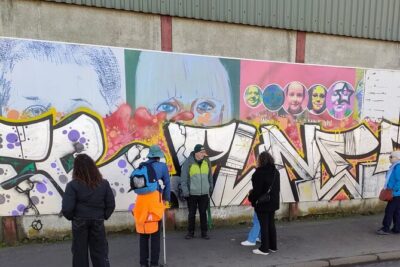
The International Wall broadens the story beyond Belfast. Its murals connect local politics with international struggles and causes. You get a sense of how walls in this part of the city became public noticeboards, memorial spaces, and political statements all at once.
Bombay Street is especially important because it helps you connect the conflict to ordinary homes and streets. The Troubles were not distant events that took place only around government buildings. Families lived with attacks, displacement, fear, and divided neighborhoods. A stop here gives the history a more immediate scale.
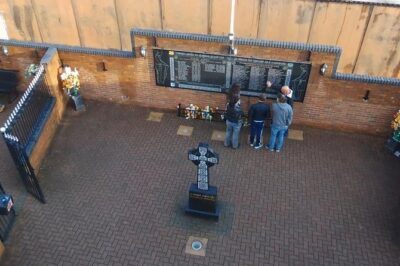
The D Company memorial garden focuses on republican remembrance. This can be one of the more emotionally charged parts of the tour because the guide may describe people involved in armed activity as community defenders or volunteers, while others remember them as members of a terrorist organization. You are not asked to adopt one view, but you should expect language and interpretation to differ sharply from what you may have read elsewhere.
This is where the tour’s title earns its place. The purpose is not to smooth away disagreement. It is to let you hear how the same decades can produce very different memories.
Crossing the Peace Wall
The route takes you to both sides of the peace wall, with several stops along or near the barrier. The wall is not only a historical exhibit. Gates in the barrier are still closed at night, with one account noting a regular closing time of 8 p.m.
That detail can surprise you. Belfast has had years of relative peace, yet the physical separation remains. The wall offers security to some residents, while also preserving the division that makes everyday contact harder. You can sign the wall, so bringing a marker is a handy extra if that matters to you.
This section is a good point to pause and consider what peace means here. The absence of widespread violence does not automatically remove fear or distrust. The tour helps you see why reconciliation can move slowly when neighborhoods still have separate memorials, separate symbols, and separate accounts of loss.
Do not expect the guide to offer a neat solution. The walk is primarily about memory and experience. It may leave you with more questions than answers, which is appropriate for a conflict that still affects politics and community life.
More walking tours in Belfast:
- Best of Belfast Walking Tour
★ 5.0 · 399 reviews - Belfast Eclectic Walking City Center Experience, The Marti Way
★ 5.0 · 348 reviews - Belfast Troubles Murals Street Art and Peace Wall Walking Tour
★ 5.0 · 163 reviews - The Real Eclectic Belfast City Walking Tour/Experience.
★ 5.0 · 152 reviews
Shankill Road and the Loyalist Story
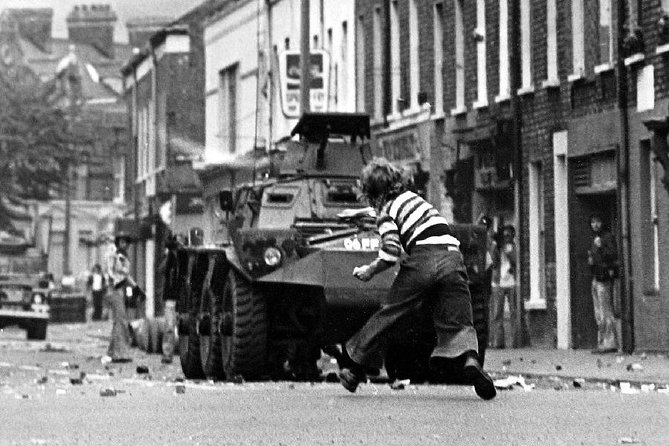
After the Falls section, the second guide takes over for the Shankill Road portion. The endpoint is 154 Shankill Road, Belfast BT13 2BE.
The change in guide is central to the experience. You move from republican memorials and nationalist murals to loyalist symbols and memorials. The second guide explains how the Protestant and unionist community experienced the conflict, including the fear of attacks, the loss of friends, and the desire to maintain Northern Ireland’s connection with the United Kingdom.
The Shankill Memorial Garden is one of the key stops. Here, the focus is on people and families affected by violence. The guide may discuss names, local events, and the way a community remembers those killed.
The route also includes the Bayardo bombing, the UVF Memorial, the Frizzells Fish Shop bombing, and the Somme Memorial. These locations show that loyalist remembrance is not one single idea. Some memorials honor armed groups, while others focus on civilian deaths and local grief.
The Bayardo and Frizzells stops are particularly useful for understanding how violence affected busy community spaces. You are confronted with the fact that attacks were not confined to combatants. Men, women, and children were among those killed.
One guide described the Shankill through the losses of childhood friends, including people from both Catholic and Protestant backgrounds. That kind of account can add an important human layer to a political explanation. It also reminds you that identity did not always prevent personal friendships, even when the neighborhoods were divided.
The second half may feel less structured depending on the guide. Some presentations give a clear timeline and explain the events in detail. Others focus more on individual murders and memorials. If you want a date-by-date political history, you may find this section uneven. If you want to hear how violence affected a local community, it can be powerful.
The Value of Former Prisoners as Guides
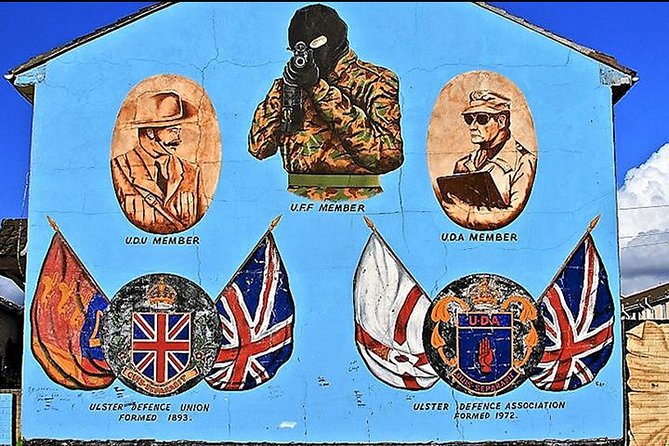
The tour’s most unusual feature is its use of guides with direct experience of the conflict, including former political prisoners. That does not make every explanation impartial, but it does make the past feel less remote.
A guide who lived through the Troubles can explain what it was like to grow up with the conflict on television, in the streets, and within the community. You may hear why someone joined a movement, how imprisonment shaped political views, or why a neighborhood honors people who remain deeply controversial.
This personal approach works best when the guide admits the limits of his own viewpoint. The most effective guides, including Paul, Ian, Jack, and Mark in different tours, appear to combine personal testimony with broader history. They also welcome questions.
You should listen carefully to the distinction between explanation and justification. Understanding why someone held a political belief does not require you to accept the violence carried out in its name. The tour is valuable because it gives you a chance to make that distinction for yourself.
The strongest sessions leave couples and friends still discussing what they heard later in the day. That is a good sign for an experience about political memory. It means the tour has moved beyond a quick photo stop.
Walking Conditions, Weather, and Group Comfort
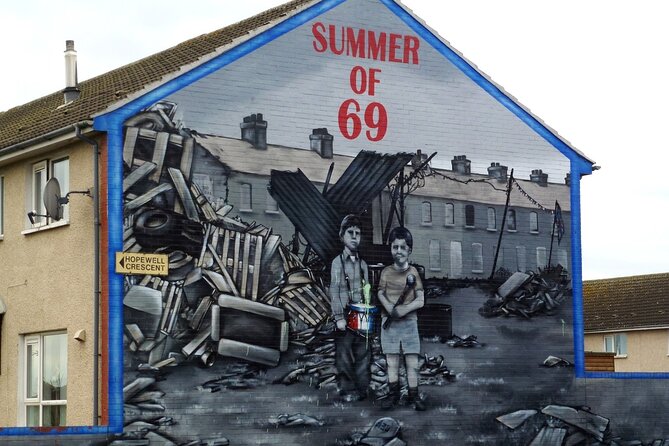
Plan for three hours outside. The route is described as a moderate walk without hills, but you will cover two 90-minute sections and stand for many explanations. Comfortable footwear is essential.
Wind is the main practical issue. Belfast weather can feel colder beside open streets and walls, even on a sunny day. Dress in layers, bring water, and carry a snack if you need one. A comfort break and a chance to buy a drink may occur early in the second section, but you should not rely on that for all your needs.
There is no promise of shelter from bad weather. The activity requires suitable weather, and poor conditions can lead to a new date or a full refund. You can cancel for a full refund up to 24 hours before the start time. Cancellations or changes made inside that window are not refunded.
The tour is offered in English and uses a mobile ticket. It is near public transportation, and service animals are allowed. Most people can take part, but the length of the walk and the need to stand outdoors make it less suitable if you have trouble walking or cannot comfortably remain outside for several hours.
Is $36.05 Good Value?
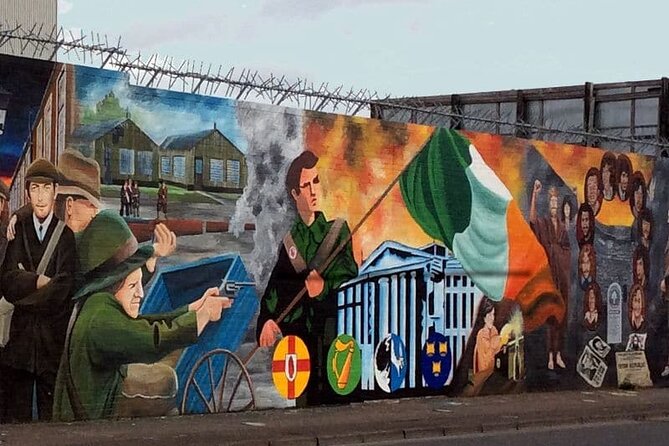
At $36.05 per person, I consider this a fair price for a three-hour experience with two guides and a small maximum group of 20.
You are not paying for entry to a museum or a grand monument. The value comes from access to local voices, the time spent at multiple locations, and the chance to hear both sides in one outing. A shorter mural walk might show you the same streets, but it would not necessarily explain the personal stories behind them.
The tour also saves you from trying to piece together the Falls and Shankill areas on your own. You get the geography, political background, and human stories in one route. For a first visit to Belfast, that makes the price easier to justify.
It is booked an average of 31 days ahead, so I would reserve it early if your schedule is fixed. If the subject is a major reason for visiting Belfast, losing your preferred date could be frustrating.
Who Will Get the Most From This Walk?
I would choose this tour if you want:
- Personal accounts rather than a purely academic presentation
- Both republican and loyalist perspectives
- A closer look at murals, memorial gardens, and the peace wall
- A serious introduction to the Troubles and their continuing effect
- A walking experience that goes beyond central Belfast
It suits adults and older teenagers who can handle difficult stories. The tour is direct and does not sugarcoat the violence. It is not a light city walk, and you should not book it if you want a simple political answer or a polished feel-good account of reconciliation.
You may prefer a black cab tour if walking for three hours is difficult. You may also prefer another format if you want a tightly organized timeline with extensive political analysis. Still, the two-guide structure offers something a standard sightseeing tour often cannot: competing memories delivered by people who lived close to the conflict.
Getting Back to Central Belfast
The walk ends on Lower Shankill Road at 154 Shankill Road. From there, it is about an eight-minute walk back to the starting point and around 15 minutes to Belfast city center.
The guide can help with directions or assist you in getting a taxi. This makes the endpoint manageable, but keep it in mind when planning a meal, another tour, or a train connection. The stated three hours describes the main experience, not extra time for returning to central Belfast.
Should You Book the Conflicting Stories Tour?
Book it if you want to understand Belfast through people and places, not just dates. The strongest part is hearing two guides explain how the same conflict created different fears, heroes, and memorials on opposite sides of one wall.
Go prepared for political opinions, emotional stories, traffic noise, wind, and a few rough edges in presentation. Ask questions respectfully, stay close enough to hear, and wear warm layers. If you do that, the $36.05 fee buys a serious and memorable introduction to a divided city still working toward peace.
FAQ
How long does the Belfast Political Tour last?
The experience lasts approximately three hours. It includes two walking sections of about 90 minutes each.
Where does the tour start?
The meeting point is Divis Tower, Belfast BT12 4QA, UK.
Where does the tour end?
The tour ends at 154 Shankill Road, Belfast BT13 2BE, on Lower Shankill Road.
How far is the endpoint from Belfast city center?
The endpoint is about a 15-minute walk from the city center. It is about an eight-minute walk back to the starting point.
What areas does the tour visit?
The route visits both sides of the peace wall in West Belfast, between the Falls and Shankill Roads. Stops include the Bobby Sands mural, International Wall, Bombay Street, Shankill Memorial Garden, Bayardo bombing site, UVF Memorial, Frizzells Fish Shop bombing site, and Somme Memorial.
Is the tour offered in English?
Yes. The tour is offered in English.
How many people can join the tour?
The maximum group size is 20 people.
Can I cancel for a full refund?
Yes, if you cancel at least 24 hours before the scheduled start time. Cancellations or changes made less than 24 hours before the start are not refunded. If poor weather causes the tour to be canceled, you can receive a different date or a full refund.
Just added in Belfast
- Falls road Murals Walking Tour with former prisoners★ 5.0 · 19 reviews
- Private Half Day Winter Magic in the Antrim Glens★ 5.0 · 2 reviews
- Belfast’s Titanic Quarter: A Self-Guided Audio Tour★ 5.0 · 6 reviews
- The Troubles and iconic award winning taxi 2hr private cab tour★ 5.0 · 28 reviews
- Titanic Eastside Bike Tour★ 5.0 · 9 reviews
- The Single Cask Whiskey Experience★ 5.0 · 6 reviews
- Titanic Maritime Walking Tour★ 5.0 · 23 reviews
- The Giants Causeway Tour★ 5.0 · 1 review
Belfast Troubles and Mural Tours, compared.
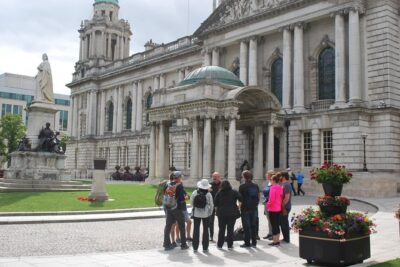
A History of Terror – Belfast City Centre Walking Tour
Read our review →
2 Hour Private Belfast Taxi Cab Tour of Troubles & Peace walls
Read our review →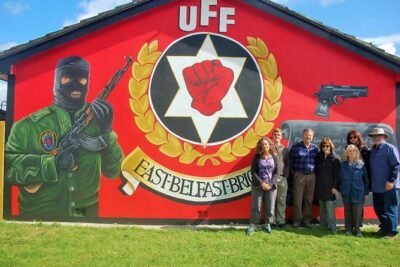
2 hours Belfast Original Drivers The Troubles Black Taxi Tour
Read our review →Browse the lists this tour appears in