
Reviewed · BELFAST BLACK TAXI TOURS
2 Hour Private Belfast Taxi Cab Tour of Troubles & Peace walls
Belfast’s walls still speak in paint. This private black taxi tour makes that story easier to grasp, taking you through Falls Road, Shankill Road, Bombay Street, and the peace walls with a guide who lived through The Troubles. I like the personal local storytelling and the chance to stop close to major murals rather than simply seeing them through a bus window. My main concern is port pickup: access problems have caused missed tours, so cruise passengers should confirm the meeting plan before booking.
I also like the private format, which lets you ask direct questions and shape the conversation around your interests. Guides including Harry, Sean, Danny, Brendan, David, and Tommy have been praised for clear explanations, patience, and personal insight. Two hours is enough for a strong introduction, but it is not enough to cover every chapter of Belfast’s past.
In This Review
- Key points to know before booking
- Why a black taxi is the right way to see Belfast’s divided streets
- Falls Road and Bobby Sands
- Shankill Road and loyalist Belfast
- The peace wall and a divided city
- International murals on Divis Street
- Clonard Monastery and the quiet work of peace
- Bombay Street and the origins of a community defense force
- The old jail and Belfast’s prison story
- What the guides add to the experience
- Timing, pickup, and the practical details
- Who should book this Belfast black cab tour?
- Should you book it?
- FAQ
- How long is the Belfast black taxi tour?
- Where does the tour begin and end?
- Is hotel pickup included?
- Is port pickup included?
- Is this a private tour?
- What language is the tour offered in?
- Can children join the tour?
- Can I cancel for a full refund?
Key points to know before booking
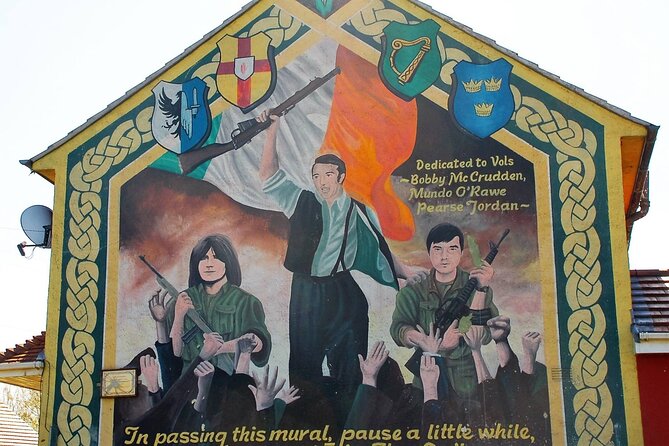
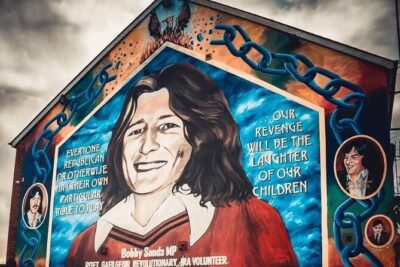
- Bobby Sands mural on Falls Road: Stop beside one of Belfast’s best-known political murals and Sinn Féin headquarters.
- Shankill Road and loyalist history: Hear how this Protestant working-class district became central to The Troubles.
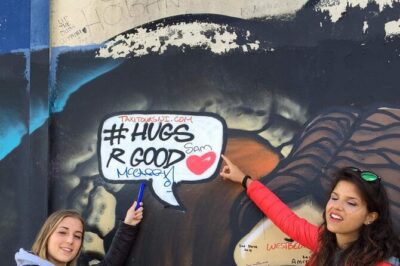
- Peace wall visit: Write a message on the wall and see the physical scale of the barrier dividing communities.
- Private black cab setting: Your group rides alone with a professional guide and can ask questions throughout.
- Personal stories from local guides: Several guides grew up in Belfast during the conflict and explain events through lived experience.
- Port pickup needs checking: The tour includes port pickup in its description, but access restrictions have caused serious communication problems.
Why a black taxi is the right way to see Belfast’s divided streets
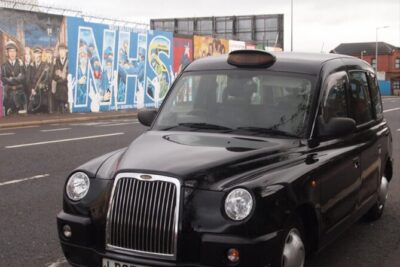
A black cab is a fitting vehicle for this subject. Belfast’s famous taxi tours grew from drivers who knew the neighborhoods, the murals, and the political lines dividing one street from another. Here, you are not being whisked past the city from a distance. You stop, get out, take photographs, and ask the guide to explain what you are seeing.
The private setup matters. Only your group participates, so you can ask about the symbols on a mural, the difference between republican and loyalist communities, or the way the peace process changed daily life. A large group tour can make a sensitive subject feel rushed. With a private cab, the conversation can be more measured.
The tour is offered in the morning or afternoon and lasts about two hours. That makes it easy to fit around other Belfast plans, but the schedule is tight. Several stops last only 10 or 15 minutes, while Falls Road, Shankill Road, and Bombay Street receive more time. If you want long museum visits or a full political history lesson, you will need to add those separately.
The price is listed at $117.83 per person. That is a serious cost for two hours, especially for one or two people. For a full private group, the value improves because you are paying for the vehicle, guide, and direct attention rather than a seat on a standard sightseeing bus. I would judge the price mainly by group size and the quality of your guide.
More black taxi tours in Belfast:
- Cab Tours Belfast Famous Black Taxi Tours
★ 5.0 · 3,633 reviews - Private Black Taxi Belfast City Tour
★ 5.0 · 2,188 reviews - Belfast’s Political Mural Taxi Tour
★ 5.0 · 1,180 reviews
Falls Road and Bobby Sands
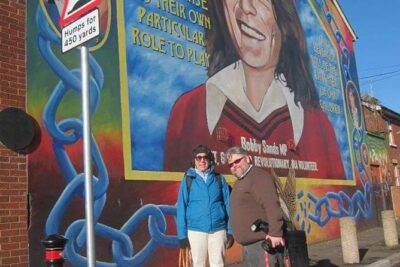
The first major stop is Falls Road Library, beside the mural of Bobby Sands MP. Sands was an IRA hunger striker who died in prison in 1981, and his image has become one of the most recognizable political murals in Belfast.
You have about 25 minutes here, which is enough time for photographs and an explanation of the mural’s meaning. This is not just a colorful wall for a holiday picture. It reflects republican identity, the memory of the hunger strikes, and the continuing political importance of Falls Road.
The stop also includes a view of Sinn Féin headquarters. Your guide can connect the older armed conflict with the later political process and the role of republican parties in modern Northern Ireland. That link is one of the most useful parts of the tour because The Troubles did not end as a simple story of one side winning and the other losing.
I would listen carefully to the language used here. Terms such as republican, nationalist, loyalist, and unionist are not interchangeable, and a good guide will explain the differences without turning the visit into a political lecture. Danny was praised for combining personal experience with historical explanation, while Sean was noted for taking time to answer questions about the wall and the conflict.
Shankill Road and loyalist Belfast
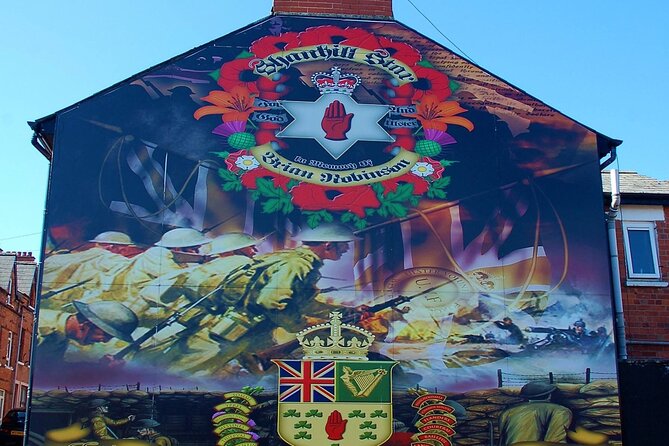
The cab then crosses to Shankill Road, the heart of loyalist Belfast. This is a useful counterpoint to Falls Road. You see another community’s murals, symbols, memorials, and political story, including the background of loyalist groups such as the UVF and UFF.
The contrast between the two roads is central to the experience. If you only visit republican murals, you will get a partial picture. The Shankill stop shows why many Protestant and unionist residents felt under threat and how loyalty to the United Kingdom shaped identity, community defense, and politics.
You have roughly 25 minutes here. That allows time to leave the cab and look at the murals rather than treating the road as a quick drive-by. The subject can be uncomfortable, and the murals may include military imagery or memorials to people involved in violence. I see that as a reason to pay closer attention, not a reason to avoid the stop, provided you approach it with respect.
A local guide can make a major difference here. One guide, Joe, was praised for answering openly and helping explain how the conflict looked from more than one point of view. That balance is important. Belfast’s past is still personal, and a neat, overly polished account would miss the point.
The peace wall and a divided city
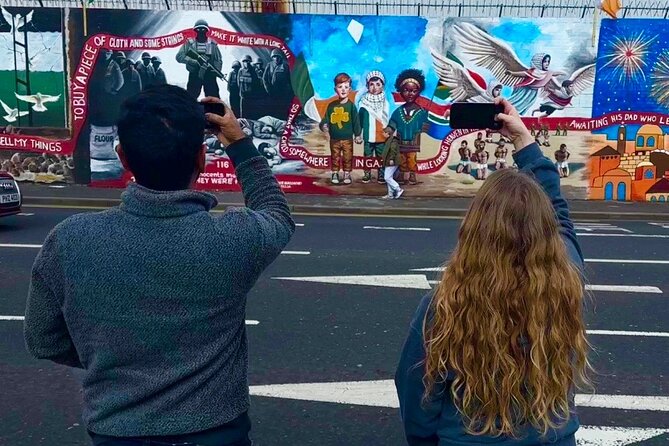
The peace wall is the tour’s clearest physical symbol. These barriers separate communities in parts of Belfast, even though the city has enjoyed a much calmer public life since the peace process.
The stop lasts around 15 minutes. You can write a message on the wall, following the tradition of public figures who have added comments there, including Lady Gaga, Morgan Freeman, and President Clinton. The writing is a small act, but it gives you a direct connection to a place that has become both a political structure and a visitor landmark.
The scale of the wall is difficult to understand from a photograph. The description compares its height with the Berlin Wall, saying it is five times higher. I would treat that comparison as a guide to its imposing scale rather than getting caught up in exact measurements. The important point is that this is not a low garden divider. It is a large barrier built to keep neighboring communities apart.
The peace wall also raises a hard question: if Belfast is more peaceful, why are these walls still here? Your guide can explain that peace and full social integration are not the same thing. The wall remains a reminder that calm streets do not erase old fears or remove every boundary.
More political history tours in Belfast:
- A History of Terror – Belfast City Centre Walking Tour
★ 5.0 · 2,883 reviews - Belfast Troubles Tour: Walls and Bridges
★ 5.0 · 853 reviews - Famous 1.5 hour Belfast Murals Tour
★ 5.0 · 477 reviews - Belfast Political Tour-Conflicting Stories Walking Tour
★ 4.5 · 459 reviews
International murals on Divis Street
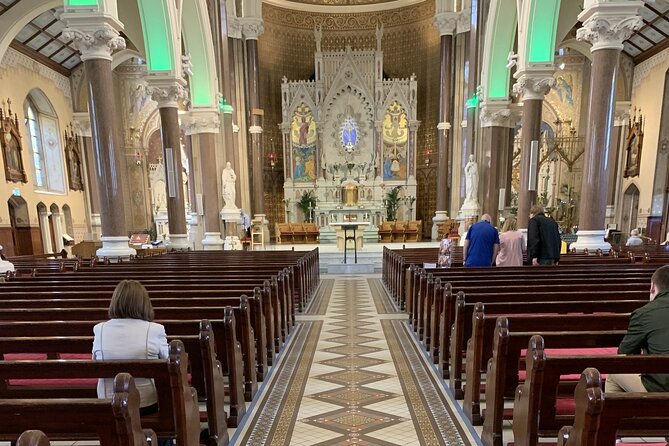
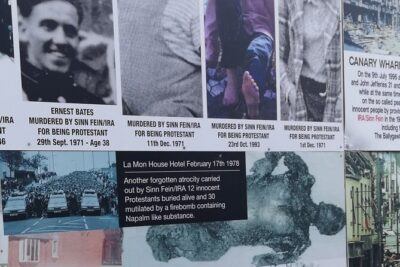
The International Mural Wall on Divis Street gives the tour a wider frame. More than 60 murals have been painted by local artists with connections to causes and communities around the world, including Cuba, Turkey, and Palestine.
You have about 10 minutes here. That is enough for a quick look and photographs, but not enough to study every mural. If political art interests you, this may be the stop where you most wish for extra time.
What makes this wall useful is the way it shows Belfast’s murals are not all memorials to local conflict. Some connect Northern Ireland with international struggles, solidarity movements, and political causes. The wall becomes a visual record of how local identity can reach far beyond the city.
I would ask your guide which murals are most important and why. With such a short stop, a little direction will help you focus on the work that best explains the political culture of the area.
Clonard Monastery and the quiet work of peace
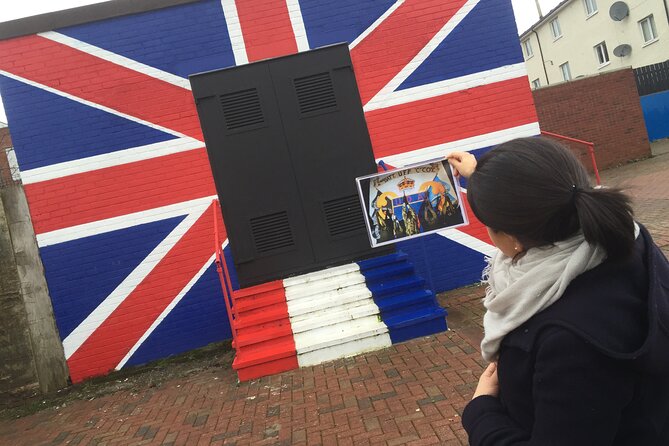
Clonard Monastery sits in the Falls area and is linked with secret talks between Gerry Adams and John Hume. Those talks formed part of the long effort to move republican politics toward a peace process.
The stop is brief, around 10 minutes, but its importance is not visual. This is less about a grand sight and more about the behind-the-scenes work that helped shift Northern Ireland away from violence. The monastery represents the role of private meetings, trusted intermediaries, and conversations that could not take place openly at first.
I appreciate this stop because it keeps the tour from becoming a sequence of dramatic murals. The Troubles were shaped by public violence, but peace also required patient, quiet negotiation. You get a better sense of that change when the guide connects Clonard Monastery with the wider political path.
Bombay Street and the origins of a community defense force
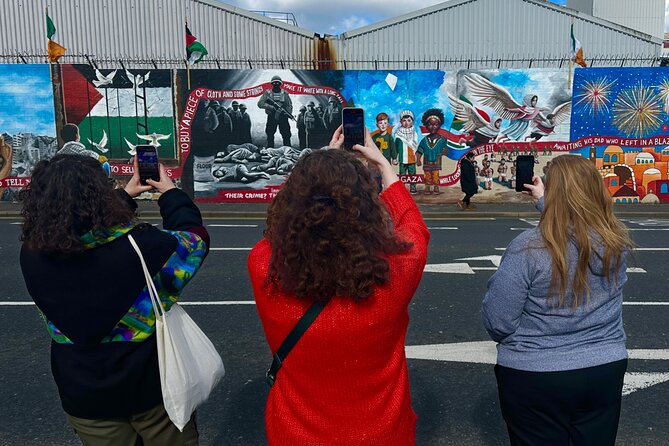
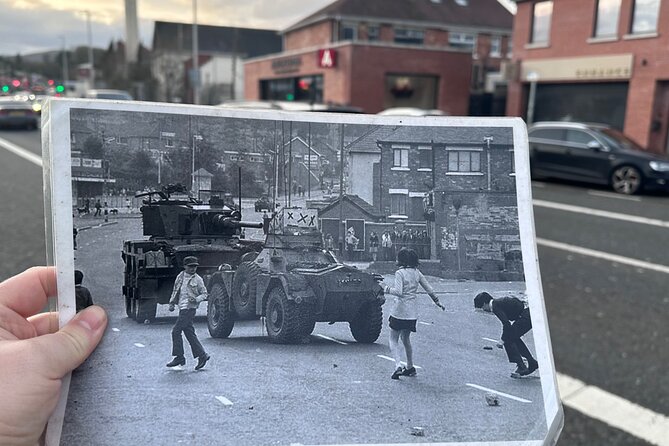
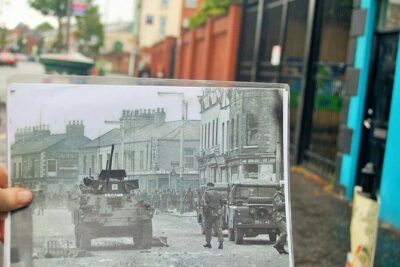
Bombay Street is one of the most sobering stops. In 1969, homes in the area were burned, and the Provisional IRA emerged in response to the violence and insecurity faced by parts of the Catholic community.
You have about 20 minutes here, making it one of the longer stops. The guide uses the site to explain the immediate events of 1969 and place them within centuries of British and Irish history. That wider context is useful, but I would encourage you to ask for a clear timeline. Eight hundred years of history can easily become a blur in a two-hour tour.
This is also where the guide can explain the end game of the peace process. The point is not to excuse violence or present one community as entirely innocent. It is to show how fear, discrimination, retaliation, paramilitary groups, and political failure fed one another.
For me, Bombay Street is valuable because it moves the story from murals and public symbols to ordinary homes. The conflict was not an abstract argument between politicians. Families lived with burned houses, military presence, intimidation, and the threat of attack.
The old jail and Belfast’s prison story
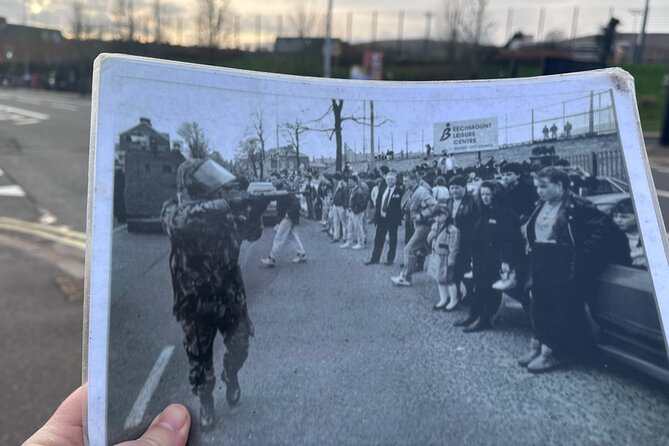
The final stop is an old jail built in the 1800s. It operated as a hanging jail until the 1960s and held some of the most famous loyalist and republican prisoners. It was also the scene of several escapes.
The supplied details do not specify the jail’s name or include an admission visit, so you should not assume that this part includes entry. It appears to be a stop for explanation and viewing rather than a full prison tour.
Even a short exterior stop adds another piece to the story. Prisons were central to The Troubles, from hunger strikes and political imprisonment to escapes and the treatment of prisoners from opposing communities. This stop can help connect the Bobby Sands mural with the institutions that shaped the conflict.
What the guides add to the experience
The strongest part of this tour is the guide. Harry has been praised for making the subject accessible and for giving a strong account of Belfast’s past. Brendan was described as patient, humorous, and willing to answer many questions. David was praised for sharing personal and historical stories, while Tommy was singled out for his friendly manner.
Danny’s personal connection was especially important. He grew up in Belfast and used his own experience to help explain why the city’s divisions developed. Another guide asked that his name not be included because of current tensions, a reminder that this is not a distant subject for everyone involved.
You should ask questions, but do so with care. The best question is often not who was right, but how ordinary people experienced a particular event or why a community remembers it in a particular way. I would also ask your guide to explain the difference between the political groups shown on the murals and the wider communities they claimed to represent.
The experience has a 4.9 rating from 240 reviews, with 98 percent recommending it. Those figures point to a strong pattern of satisfaction, especially around personal explanations and the guides’ ability to make a difficult subject understandable. Still, your exact experience will depend heavily on which guide is assigned.
Timing, pickup, and the practical details
The tour begins at Belfast City Hall on Donegall Square North and ends back at the meeting point. Free pickup is offered in Belfast city center, with a surcharge outside the stated one-kilometer radius from City Hall.
Hotel and port pickup are listed among the inclusions, but cruise passengers need to take special care. At least two serious complaints involved missed or canceled port tours, including a reported problem where the shipyard did not allow the taxi or driver into the port. The issue appears to involve access and communication rather than the sightseeing route itself, but that distinction will not help if you are standing at the terminal with no cab.
If you are arriving by ship, contact the operator before the tour date and confirm the exact pickup point, access rules, and backup plan. Do not rely only on the words port pickup. Ask where you should wait and how the driver will identify you. This is the single most important practical warning I can give.
Children must be accompanied by an adult. Service animals are allowed, and the tour is near public transportation. Most people can participate, but remember that you will be getting in and out of a vehicle at several stops.
Free cancellation is available up to 24 hours before the start time. Changes or cancellations inside that window are not accepted for a refund. The tour also requires good weather, with a different date or full refund offered if poor conditions force cancellation.
Who should book this Belfast black cab tour?
I would choose this tour if you want a focused introduction to The Troubles and prefer stories, murals, and neighborhoods over a formal museum visit. It suits first-time visitors who want to understand why Belfast’s streets still contain visible political boundaries.
It is also a good choice for families with older children, couples, and small groups who want to ask questions freely. The private arrangement gives you more control than a standard group tour, and the two-hour length works well before or after other city plans.
I would hesitate if you want a relaxed sightseeing ride with little political discussion. The subject includes killings, prison, hunger strikes, burned homes, and paramilitary groups. It can be upsetting, and the experience asks you to think rather than simply admire the murals.
Should you book it?
Yes, if your goal is to understand Belfast through its divided neighborhoods and a local guide’s personal account. The route covers the essential contrasts: Falls Road and Shankill Road, republican and loyalist murals, the peace wall, international political art, Clonard Monastery, Bombay Street, and the old jail.
The value is strongest for a private group that will use the guide’s time well. Ask questions, request both community perspectives, and confirm port arrangements in writing if you are arriving by cruise ship. If you do those things, this should give you a clear, human introduction to a difficult part of Belfast’s story.
FAQ
How long is the Belfast black taxi tour?
The tour lasts approximately two hours.
Where does the tour begin and end?
It begins at Belfast City Hall on Donegall Square North and ends back at the meeting point.
Is hotel pickup included?
Pickup is offered from Belfast city center. A surcharge applies outside the stated one-kilometer radius from City Hall.
Is port pickup included?
Port pickup and drop-off are listed as included. However, port access restrictions have caused problems, so cruise passengers should confirm the exact pickup arrangements before the tour.
Is this a private tour?
Yes. Only your group participates, and transport is provided in a private vehicle with a professional guide.
What language is the tour offered in?
The tour is offered in English.
Can children join the tour?
Yes. Children must be accompanied by an adult.
Can I cancel for a full refund?
You can cancel at least 24 hours before the experience start time for a full refund. Cancellations or changes made less than 24 hours before the start time are not accepted for a refund.
Just added in Belfast
- Private Half Day Winter Magic in the Antrim Glens★ 5.0 · 2 reviews
- Falls road Murals Walking Tour with former prisoners★ 5.0 · 19 reviews
- Belfast’s Titanic Quarter: A Self-Guided Audio Tour★ 5.0 · 6 reviews
- The Troubles and iconic award winning taxi 2hr private cab tour★ 5.0 · 28 reviews
- Titanic Eastside Bike Tour★ 5.0 · 9 reviews
- The Single Cask Whiskey Experience★ 5.0 · 6 reviews
- Titanic Maritime Walking Tour★ 5.0 · 23 reviews
- The Giants Causeway Tour★ 5.0 · 1 review
Belfast Black Taxi Tours, compared.
World Famous Belfast City Centre Black Cab/Taxi Tour 2 Hours
Read our review →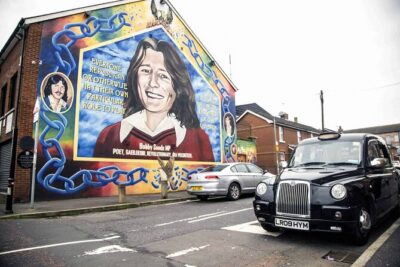
Black Taxi Tour and Crumlin Road Gaol tour Combo
Read our review →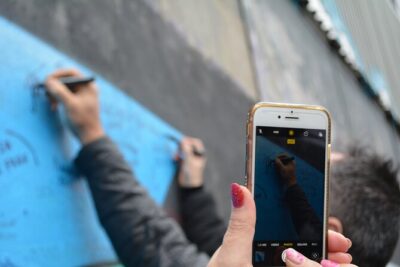
Browse the lists this tour appears in