
Reviewed · BELFAST TROUBLES AND MURAL TOURS
A History of Terror – Belfast City Centre Walking Tour
Belfast’s past is written into ordinary streets. This 2.5-hour walking tour makes that past easier to understand through clear political context and personal stories from guides who have lived through the period. I like the route’s mix of major events and small street-level details, and I also like that it ends with a hopeful look at Belfast today. The main drawback is that the tour covers painful subjects, so it is not light sightseeing.
You walk about 1.5 miles through the flat city centre, stopping often to listen rather than marching from sight to sight. A group of up to 25 people is manageable, and headsets help you hear the guide. Still, one poor experience involved a failed speaker, so the audio equipment is worth checking early.
In This Review
- Key points to know before you book
- Starting beneath Belfast City Hall
- Donegall Place and the Ring of Steel
- Castle Lane and violence in a shopping district
- The Spirit of Belfast and the 1971 turning point
- The Cathedral Quarter, from conflict to culture
- Ann Street, policing, and the border question
- The Beacon of Hope beside the River Lagan
- How much walking and standing should you expect?
- Guide quality and the value of personal stories
- Is $36.06 a fair price?
- Who should book this Belfast history tour?
- Should you book A History of Terror?
- FAQ
- Where does the Belfast walking tour start?
- Where does the tour end?
- What time does the tour begin?
- How long is the experience?
- How much walking is involved?
- Is the tour suitable for children?
- What happens if the weather is poor?
Key points to know before you book
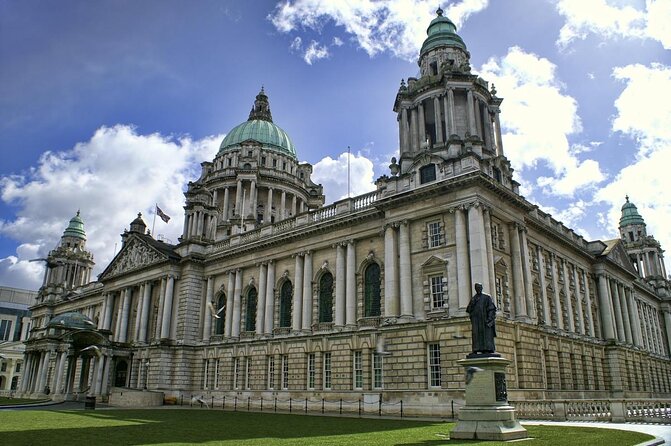
- The tour begins at Belfast City Hall: You get the historical background before visiting places connected with violence during The Troubles.
- The route is easy underfoot: Belfast city centre is flat, with no hills or steps, though comfortable shoes and weatherproof clothing still matter.
- The Cathedral Quarter adds a sharp contrast: Today’s bars, street art, and nightlife sit beside stories from the darkest years of the city’s past.
- Local guides make the history personal: Guides including James, Anne, Mylie, Róisín, Chris, and Rorey have been praised for clear storytelling and firsthand insight.
- The final message is cautious but hopeful: The tour explains the peace process, Belfast’s regeneration, and the uncertainty created by Brexit.
- The price is fair for a focused history tour: At $36.06 per person, you are paying for two and a half hours of guided interpretation, not admission tickets.
Starting beneath Belfast City Hall
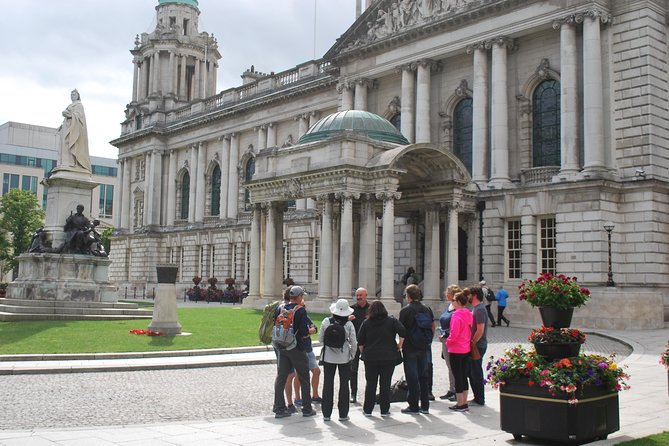
Meet at 10:30 am in the grounds of Belfast City Hall, at Donegall Square North. This is a useful starting point because the grand civic building gives you an immediate sense of Belfast as a British city, while the guide begins explaining the long relationship between British and Irish political identities.
The opening section covers the background to The Troubles and explains why violence escalated in the late 1960s. That context matters. Without it, the rest of the walk can feel like a string of bombings and political labels. With it, you get a basic framework for understanding unionism, Irish nationalism, British rule, partition, and the religious divisions that shaped daily life.
You spend about 20 minutes here. It is mostly a standing introduction, so arrive ready to listen rather than expecting to enter the building. The guide’s ability to set a fair tone is important, and this is one of the strongest features praised across the experience. Guides such as James, Anne, and Mylie have been singled out for presenting both sides without turning the tour into a political speech.
More political history tours in Belfast:
- Belfast’s Political Mural Taxi Tour
★ 5.0 · 1,180 reviews - Belfast Troubles Tour: Walls and Bridges
★ 5.0 · 853 reviews - Famous 1.5 hour Belfast Murals Tour
★ 5.0 · 477 reviews
Donegall Place and the Ring of Steel
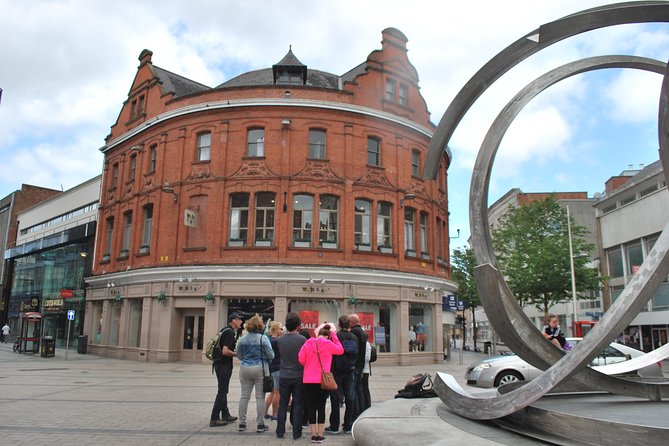
From City Hall, the route moves to Donegall Place, now a central shopping street. You might pass through it without guessing that it was connected to a nightclub bombing in 1971 and the tragic events that followed.
This stop shows how The Troubles affected normal city routines. The history is not confined to memorials or former battle zones. It happened beside shops, offices, restaurants, and places where people were simply meeting friends. The guide explains the bombing, the human cost, and the introduction of the security system later known as the Ring of Steel.
Allow about 15 minutes here. The stop is valuable because it turns an everyday commercial street into a place with memory. It also helps you see why security measures became such a visible part of Belfast life. The discussion is serious and can be upsetting, particularly when the guide details loss of life.
This is a good point to remember that the tour is not a ghost walk or a sensational crime tour. Its focus is political history and human consequences. The best guides keep the tone respectful, using names and personal accounts rather than treating tragedy as entertainment.
Castle Lane and violence in a shopping district
Castle Lane sits in the pedestrian centre, surrounded by the ordinary activity of shops and passersby. Here, the guide describes what life felt like at the height of The Troubles and discusses an event that remains firmly fixed in Belfast’s collective memory.
The stop lasts about 15 minutes. As with much of the route, you stand while the guide speaks, then walk a short distance to the next point. One person found the experience involved more standing and listening than actual walking, and that is a fair warning. If you want a fast-paced sightseeing walk with constant movement, this will feel slow.
I think the slower rhythm suits the subject. You need time to take in what happened and to notice the contrast between the modern pedestrian area and the violence once associated with it. The walk does not rely on grand ruins or preserved buildings. Its power comes from understanding what happened in places that now look completely ordinary.
The Spirit of Belfast and the 1971 turning point
The next stop is the Spirit of Belfast sculpture beside the river, a piece of public art that many locals nickname the Onion Rings. The artwork represents resilience, but the guide uses this location to explain a chain of events that began in a nearby bar in 1971.
This section is about escalation. The guide connects a local incident with the wider slide into sustained violence. You begin to see that The Troubles were not caused by one isolated event. Political pressure, community division, policing, retaliation, and fear fed into each other.
The stop takes around 15 minutes. The sculpture gives you a visual marker and a brief change of mood, though the material remains difficult. A strong guide will help you follow the sequence without burying you in dates. Several guides have received praise for making complicated events easy to follow while adding personal memories from growing up in Belfast.
The headsets are useful here, especially if the area is noisy. They let you remain near the guide without pressing into a tight circle. One technical failure was reported during a tour, when the speaker stopped working and the guide did not adjust enough for the whole group to hear. That appears to be an exception, but it is sensible to speak up immediately if the sound is unclear.
More history tours in Belfast:
- Giants Causeway & Castles Tour from Belfast: Guided tour
★ 5.0 · 1,432 reviews - Giants Causeway, Rope Bridge, Carrickfergus Castle and Dark Hedges Tour
★ 4.0 · 596 reviews - Giant’s Causeway Tour from Belfast – Luxury Bus + Castles Tour
★ 4.5 · 372 reviews - From Belfast-Giants Causeway, Dunluce Castle and Dark Hedges tour
★ 4.5 · 193 reviews
The Cathedral Quarter, from conflict to culture
The Cathedral Quarter provides the tour’s strongest visual contrast. Today, its lanes and streets are known for bars, nightlife, street art, and cultural activity. During the walk, those same spaces become a setting for stories about major events and the early path toward peace.
You spend about 20 minutes in this area. The guide explains how Belfast has changed since the 1970s and how the city moved from fear and heavy security toward a more open public life. The point is not to pretend that every problem has disappeared. It is to show the distance Belfast has travelled.
I especially like this part because it connects history with what you see around you. Street art and regenerated buildings are not just decoration. They sit within a city still working out how to remember, how to share space, and how to present itself to the outside world.
The guide’s delivery matters greatly here. James has been praised for his enthusiasm and ability to keep the group involved. Mylie has been praised for combining political history with the city’s present. Róisín has been described as a powerful storyteller, drawing on personal experience to help you picture daily life during The Troubles.
The subject remains emotional. You may hear about deaths and attacks while standing near lively venues. That contrast can be jarring, but it is also one of the most honest parts of the tour.
Ann Street, policing, and the border question
At Ann Street, you stand beside Belfast’s largest police station and learn how Northern Ireland was policed during The Troubles. The guide then explains how policing changed after the peace agreement.
This 15-minute stop helps explain the security side of the conflict. Earlier parts of the tour focus on attacks, victims, and political causes. Here, you consider the daily presence of police, the role of security, and the way public institutions were viewed by different communities.
The discussion also reaches Brexit and the possible effect on borders. That gives the tour a modern edge. Belfast’s past is not presented as a sealed chapter. Political arrangements, identity, and the border between Northern Ireland and the Republic of Ireland still matter.
This stop may be especially useful if you know little about Northern Ireland’s current political tensions. The guide does not need to tell you what conclusion to reach. Instead, the aim is to give you enough background to understand why language, symbols, policing, and borders remain sensitive topics.
The Beacon of Hope beside the River Lagan
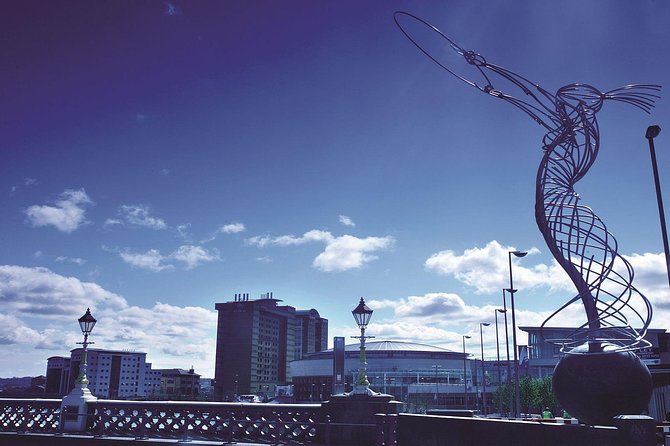
The tour ends at the Beacon of Hope on Oxford Street, beside the River Lagan. This public artwork represents resilience and regeneration, making it a fitting place to compare modern Belfast with one of the darkest periods in its history.
The final discussion lasts about 20 minutes. You hear how peace was achieved, why it remains fragile, and what the future may hold. The ending is hopeful without becoming sugary. Belfast has changed, but the guide makes clear that peace requires care and ongoing work.
The ending point is practical too. It is about a five-minute walk back to City Hall, so you are not stranded at the far end of the route. You finish near the waterfront, where you can continue exploring or return to the central shopping area.
How much walking and standing should you expect?
The route covers roughly 1.5 miles, and Belfast city centre is completely flat. There are no hills or steps on the route, making it suitable for most people who can manage a moderate amount of walking.
The main physical demand is standing. Each stop lasts between 15 and 20 minutes, and the guide does most of the talking at fixed locations. If you need frequent seating, ask about a place to sit when you arrive, but seating is not guaranteed at every stop.
Wear comfortable shoes. A waterproof jacket is a smart choice because the tour runs in normal weather conditions and Belfast showers can arrive without much warning. Warm clothes are recommended in winter.
The tour is offered in English and includes a mobile ticket. Service animals are allowed, and the meeting point is close to public transport.
Guide quality and the value of personal stories
The guide can make or break a history walk, and this experience has received especially strong praise for presentation. The most valued guides do more than recite dates. They explain the political background, describe the human cost, and connect the past with streets you are standing on.
Several guides have shared memories from growing up during The Troubles. Anne has been praised for describing life as a child during that period. Róisín has been praised for bringing emotion and personal experience to the stories. Chris has been described as giving a careful, balanced account of the terror years. James is repeatedly praised for warmth, humor, and clear explanations.
The guide may not always be from Belfast. One particularly well received guide, Mylie, is American, but her command of the subject and engaging delivery made that distinction unimportant. The useful question is not nationality. It is whether the guide can handle the material fairly and sensitively.
One negative experience involved a sound system failure in a group of 25. The guide was described as informed, but several people could not hear him after the equipment stopped working. This is worth noting because a large group and an outdoor setting can make quiet delivery difficult.
Is $36.06 a fair price?
At $36.06 per person, this is not the cheapest way to spend a morning in Belfast. You are not paying for museum entry, transport, or a major attraction. The value comes from having a guide organize a difficult subject into a clear route and explain what you are seeing.
For two and a half hours, the price works well if The Troubles are a main reason for visiting Belfast. You get seven stops, a local guide, headsets, and a structured account that links history, politics, personal experience, and current issues.
I would not book it simply as a general introduction to Belfast. The walk includes city sights, but its purpose is serious historical interpretation. If you want the Titanic story, architecture, food, or a broad orientation tour, another experience may suit you better.
The strong satisfaction rate, 5-star rating, and repeated praise for guides such as James, Anne, and Mylie suggest that the tour usually delivers good value. The group size of up to 25 is large enough to keep the price reasonable, though small groups generally make it easier to ask questions and hear every detail.
Who should book this Belfast history tour?
I would recommend it to anyone who wants to understand Belfast before exploring the city on their own. It works particularly well early in your stay because the route gives meaning to streets, public art, police buildings, and regenerated districts you may visit later.
It also suits visitors with a personal connection to Ireland, Britain, or the Northern Irish conflict. The balanced approach can help you recognize that you may have heard only one side of the story. The guide aims to present the political and religious divisions without asking you to adopt a position.
The minimum age is 12. The subject includes violence, death, terrorism, and political conflict, so parents should decide if the material is suitable for younger teenagers.
I would skip it if you want cheerful sightseeing, dislike standing outdoors, or would find stories of attacks and loss of life too distressing. This is a serious tour, but it is not designed to shock you. Its strongest quality is the effort to explain rather than sensationalize.
Should you book A History of Terror?
Yes, if you want a careful and human account of Belfast’s recent past. The flat route is manageable, the price is reasonable for 2.5 hours of guided attention, and the final stop gives you a useful sense of Belfast’s uncertain but hopeful future.
Book it especially if The Troubles are unfamiliar to you. Go with comfortable shoes, a waterproof layer, and an open mind. Ask questions when appropriate, listen closely, and remember that the most important parts of the tour happen on ordinary streets where the past is still close beneath the surface.
Free cancellation is available up to 24 hours before the 10:30 am start for a full refund. Changes or cancellations inside 24 hours are not refunded. The provider may also offer another date or a full refund if poor weather causes cancellation.
FAQ
Where does the Belfast walking tour start?
It starts in the grounds of Belfast City Hall at Donegall Square North, Belfast BT1 5GS.
Where does the tour end?
It ends at the Beacon of Hope on Oxford Street, Belfast BT1 3NB. From there, City Hall is about a five-minute walk away.
What time does the tour begin?
The tour starts at 10:30 am.
How long is the experience?
It lasts approximately 2 hours and 30 minutes.
How much walking is involved?
The route covers about 1.5 miles. Belfast city centre is flat, with no hills or steps, but comfortable footwear is advised.
Is the tour suitable for children?
The minimum age is 12. Because the tour discusses violence, terrorism, and loss of life, parents should consider the subject matter before booking for younger teenagers.
What happens if the weather is poor?
The tour generally takes place in different weather conditions, so a waterproof jacket is recommended. If the experience is canceled because of poor weather, you will be offered another date or a full refund.
More Walking Tours in Belfast
- Belfast Political Tour-Conflicting Stories Walking Tour
★ 4.5 · 459 reviews - Best of Belfast Walking Tour
★ 5.0 · 399 reviews - Belfast Troubles Murals Street Art and Peace Wall Walking Tour
★ 5.0 · 163 reviews - The Real Eclectic Belfast City Walking Tour/Experience.
★ 5.0 · 152 reviews
More City Tours in Belfast
- Private Black Taxi Belfast City Tour
★ 5.0 · 2,188 reviews - City Sightseeing Belfast Hop-On Hop-Off Bus Tour
★ 4.5 · 2,012 reviews - Belfast Eclectic Walking City Center Experience, The Marti Way
★ 5.0 · 348 reviews - Shore Excursion from Belfast: Including Giants Causeway and Belfast City.
★ 4.0 · 192 reviews
Just added in Belfast
- Falls road Murals Walking Tour with former prisoners★ 5.0 · 19 reviews
- Private Half Day Winter Magic in the Antrim Glens★ 5.0 · 2 reviews
- Belfast’s Titanic Quarter: A Self-Guided Audio Tour★ 5.0 · 6 reviews
- The Troubles and iconic award winning taxi 2hr private cab tour★ 5.0 · 28 reviews
- Titanic Maritime Walking Tour★ 5.0 · 23 reviews
- Titanic Eastside Bike Tour★ 5.0 · 9 reviews
- The Single Cask Whiskey Experience★ 5.0 · 6 reviews
- The Giants Causeway Tour★ 5.0 · 1 review
Belfast Troubles and Mural Tours, compared.
Belfast Political Tour-Conflicting Stories Walking Tour
Read our review →
2 Hour Private Belfast Taxi Cab Tour of Troubles & Peace walls
Read our review →
2 hours Belfast Original Drivers The Troubles Black Taxi Tour
Read our review →Browse the lists this tour appears in