
Reviewed · BELFAST BLACK TAXI TOURS
Express Terror and Peace 90 min Private Belfast Cab /Taxi Tour
Belfast’s past is written on its walls. This private taxi tour makes the city’s difficult political story easier to follow, taking you from Divis and the Falls Road to the Shankill Road, peace walls, murals, and sites tied to the Troubles. I especially like the private format, which gives you room to ask direct questions, and the chance to cover far more ground than you could on foot. The main drawback is the price: at $178.26 per person, it makes the best sense for a small group that values personal guiding.
The advertised name says 90 minutes, while the practical tour description lists about two hours. Allow roughly two hours, and confirm the timing when you book. I also like that pickup is free within 1 kilometer of Belfast City Hall, though airport, rail-station, and cruise-port pickup costs extra and must be paid in cash.
In This Review
- Key points to know before booking
- Why a taxi is the right way to see Belfast’s divided neighborhoods
- Divis Flats and the beginning of the Falls Road story
- The International Mural Wall on Divis Street
- Bombay Street and the birth of the Provisional IRA
- Bobby Sands, the Falls Road Library, and the 1981 hunger strike
- Clonard Monastery and the quiet side of peace talks
- Peace walls and the unfinished work of peace
- Shankill Road and the Loyalist view of Belfast
- Shankill murals and the final photographs
- What $178.26 per person really buys you
- Pickup, timing, and practical planning
- Who will get the most from this Belfast tour
- Should you book the Express Terror and Peace tour?
- FAQ
- Where does the Belfast taxi tour begin?
- Where does the tour end?
- How long does the tour last?
- Is the tour private?
- Is pickup available from Belfast airports, train stations, or cruise ports?
- What language is the tour offered in?
- Can children join the tour?
- What is the cancellation policy?
Key points to know before booking
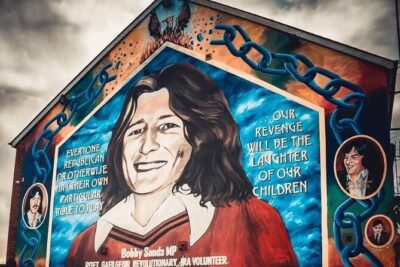
- Bobby Sands mural: The Falls Road Library mural is the emotional center of the tour and leads into the 1981 hunger strike.
- Private black cab-style sightseeing: You ride with only your own group, so the guide can adjust the conversation and explain sensitive subjects at your pace.
- Two communities in one outing: The route covers both Republican areas around the Falls Road and Loyalist areas around the Shankill Road.
- More than 60 changing murals: The International Mural Wall includes subjects such as Nelson Mandela, Ukraine, and Palestine, showing how local politics connects with world events.
- City-center pickup only: Free pickup is offered within a 1-kilometer radius of Belfast City Hall, but cruise-ship collection is not included.
- A serious, adult history lesson: This is not a light sightseeing ride. Expect politics, violence, imprisonment, hunger strikes, and the continuing presence of peace walls.
Why a taxi is the right way to see Belfast’s divided neighborhoods
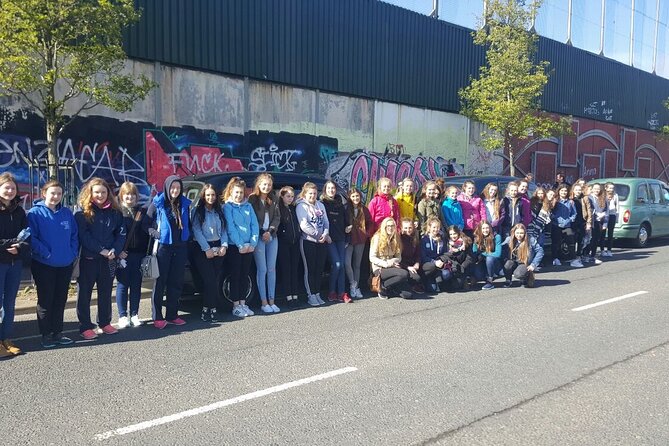
Belfast is compact enough to explore on foot, but the key sites connected with the Troubles are spread across several neighborhoods. A taxi lets you move between them without spending much of your limited city time on long walks between one mural and the next.
The private setup matters even more than the vehicle. Political history can raise awkward questions, and you may want to ask about a particular symbol, mural, organization, or event without holding up a large group. The guide can also explain how Republican and Loyalist memories differ, rather than giving you a single polished version of the past.
The strongest praise for this experience centers on the guides’ ability to explain context. Jim is singled out for taking time with questions and offering more than the basic tour script. Another guide is described as an accomplished historian who provided a nuanced account of Northern Ireland’s current political situation. That is exactly what you need here. Murals alone can be striking, but without explanation they are easy to misunderstand.
The ride is also useful for visitors who have only a short stay in Belfast. In around two hours, you can see several politically important districts, stop for photographs, and return to the city center. A walking tour may offer more time at each location, but this route gives you a wider view of how the neighborhoods fit together.
More black taxi tours in Belfast:
- Cab Tours Belfast Famous Black Taxi Tours
★ 5.0 · 3,633 reviews - Private Black Taxi Belfast City Tour
★ 5.0 · 2,188 reviews - Belfast’s Political Mural Taxi Tour
★ 5.0 · 1,180 reviews
Divis Flats and the beginning of the Falls Road story
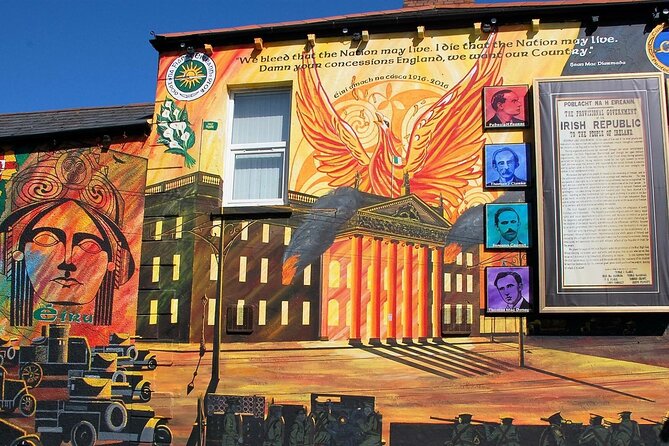
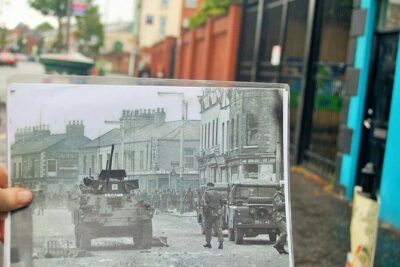
The tour begins at Divis Flats, near the mouth of the Falls Road. The area is linked with the riots of 1966, events that helped lead into the period known as the Troubles. The British Army occupied the flats until 2007, so the site also helps explain how military control became part of everyday life in Belfast.
You spend about 10 minutes here. That is enough for an introduction, not a long architectural visit. The value comes from the location and the guide’s explanation of what happened around it. You will quickly understand that the tour is not only about famous murals. It is about streets where residents experienced displacement, military presence, riots, and long-term division.
Because the stop is brief, listen closely and ask questions while you can. This opening sets up the rest of the Falls Road route.
The International Mural Wall on Divis Street
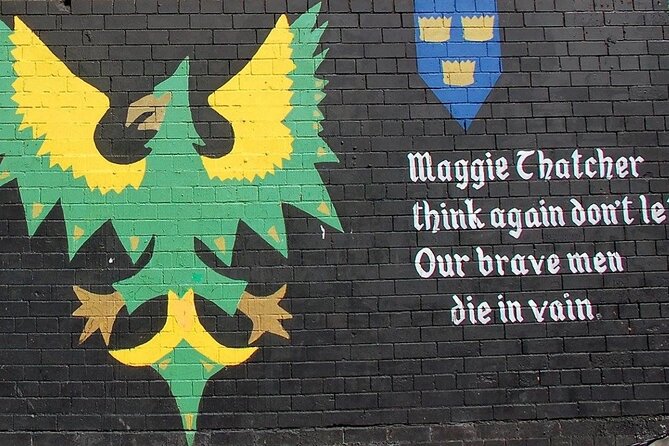
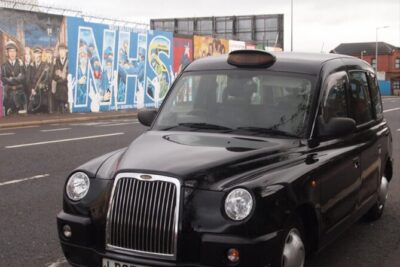
The International Mural Wall gives you a visual summary of how Belfast’s political messages have changed over time. More than 60 murals appear along the wall, with subjects including Nelson Mandela, Ukraine, and Palestine. The artwork changes with world events, so the wall is not a fixed historical display.
You have about 15 minutes here, usually enough to take photographs and hear how murals function as public statements. Some support local political causes, while others connect Belfast with struggles in other parts of the world. The guide’s job is not simply to point out the largest painting, but to help you understand that there are competing versions of justice, identity, and freedom on display.
One useful feature is that the wall highlights more than one side of a political argument. You will see why murals matter to people who live in these communities, but you should also remember that a mural is advocacy, not a neutral textbook. This is a good place to ask what is left out of each story.
Bombay Street and the birth of the Provisional IRA
Bombay Street is one of the most important stops for understanding the violence of 1969. Many residents were displaced and homes were burned, creating the conditions in which the Provisional Irish Republican Army was formed. The tour presents Bombay Street as its official birthplace.
You spend around 15 minutes here. The stop can be hard to process because the subject is not distant or abstract. It concerns families forced from their homes and a community responding to attacks and insecurity. At the same time, the later armed campaign brought its own violence and suffering. A good guide will help you hold those facts together rather than turning the stop into simple political praise.
This is one of the places where a private tour gives you an advantage. If you want more detail about 1969, the role of the police, or the relationship between community defense and paramilitary groups, you can ask without worrying about the pace of a large party.
More political history tours in Belfast:
- A History of Terror – Belfast City Centre Walking Tour
★ 5.0 · 2,883 reviews - Belfast Troubles Tour: Walls and Bridges
★ 5.0 · 853 reviews - Famous 1.5 hour Belfast Murals Tour
★ 5.0 · 477 reviews - Belfast Political Tour-Conflicting Stories Walking Tour
★ 4.5 · 459 reviews
Bobby Sands, the Falls Road Library, and the 1981 hunger strike
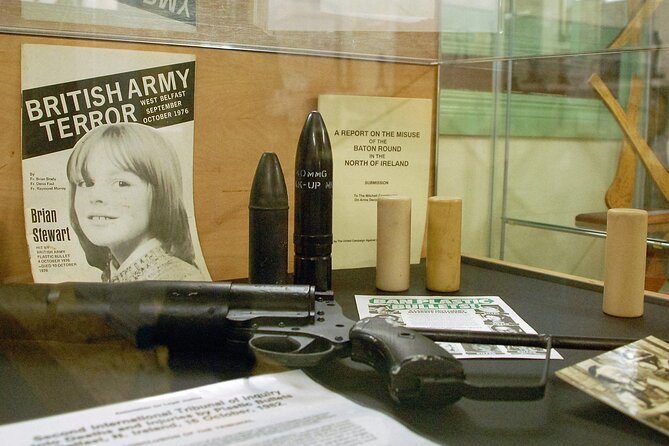
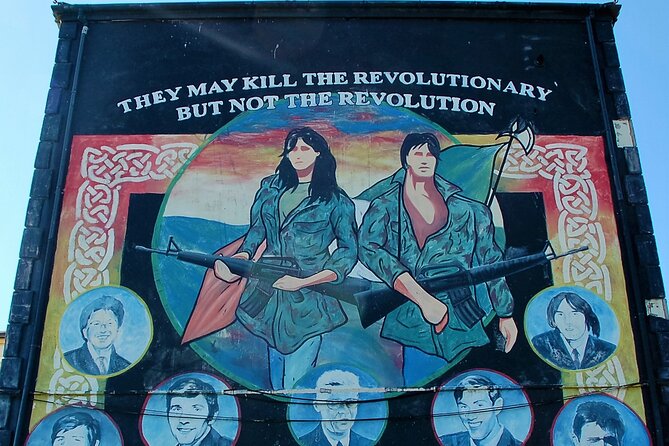
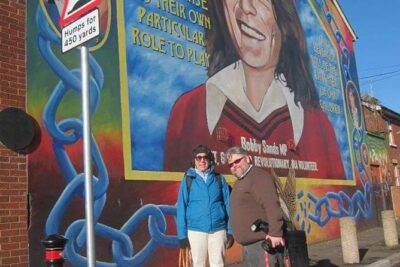
The Bobby Sands mural facing the Falls Road Library is likely to be the emotional high point of the route. Sands was an IRA volunteer and Member of Parliament who died during the 1981 hunger strike. The guide explains the strike, its political meaning, and why Sands became one of the most recognized figures associated with the Republican movement.
The library building has its own earlier history. It once served as a Royal Irish Constabulary station and later as a Black and Tans station. That contrast gives the stop extra weight. The building is not just a backdrop for a mural. It represents the changing uses of power in the neighborhood.
You receive about 15 minutes here, including time for photos and discussion. I would treat this as a listening stop rather than a quick picture opportunity. The mural is famous, but the difficult part is understanding why Sands is honored by some and viewed very differently by others.
The topic can be intense, especially for families with children. Children must be accompanied by an adult, and parents should decide how much detail is suitable before booking.
Clonard Monastery and the quiet side of peace talks
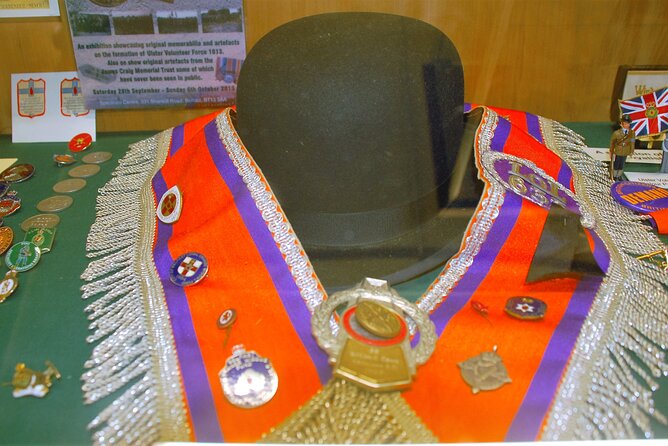
Clonard Monastery offers a sharp change in tone. The monastery hosted secret peace talks between Gerry Adams and John Hume. It was later discovered that MI5 had bugged the building, adding another layer of secrecy and suspicion to a place associated with reconciliation.
The monastery was built more than a century ago by local people and Italian builders. A particularly unusual detail is the altar, said to be made with local women’s wedding rings. That small human detail helps balance the larger political story. Belfast’s peace process was not only shaped by politicians and armed groups. Local communities also carried the cost and helped create the conditions for change.
The stop lasts about 15 minutes. Depending on the exact arrangement, the focus is the exterior and the guide’s account rather than a full religious visit, so do not book this expecting a long church tour. Its value is the connection between a familiar religious site and quiet negotiations that helped move Belfast toward peace.
Peace walls and the unfinished work of peace
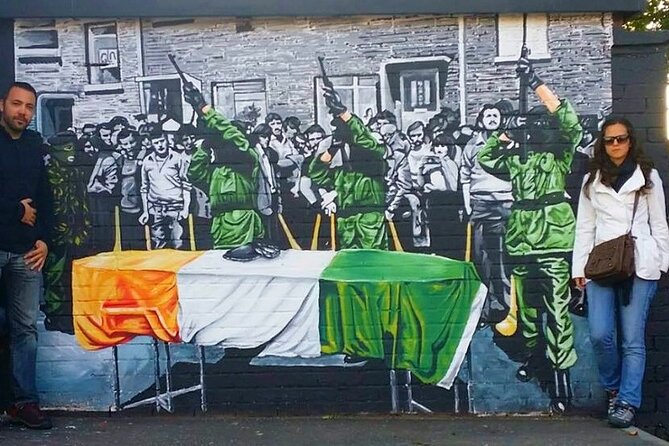
The peace wall is one of Belfast’s most visible reminders that the conflict did not simply end when agreements were signed. The first major walls were put up by the British Army in 1969, and similar barriers still remain in parts of the city.
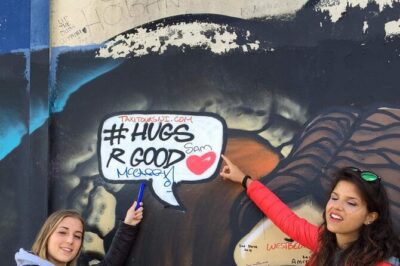
You have about 15 minutes here. Presidents, celebrities, and ordinary visitors have written messages for peace on the walls, turning them into both a political symbol and a place where people leave personal hopes. That can make the stop feel more open than the earlier sites, but the wall itself remains a physical barrier between communities.
I find this stop valuable because it prevents the tour from becoming a story with a tidy ending. The peace process changed Belfast, but division has not vanished. You can appreciate the progress while recognizing that the built environment still reflects mistrust.
The route also passes Crumlin Road Gaol and the courthouse. The prison dates from the 1800s and operated as a hanging jail until the 1960s. During the Troubles, it was linked with IRA escapes and RPG attacks. The supplied route does not give a fixed stop time for the gaol, so consider it a drive-by explanation unless your guide confirms a longer visit.
Shankill Road and the Loyalist view of Belfast
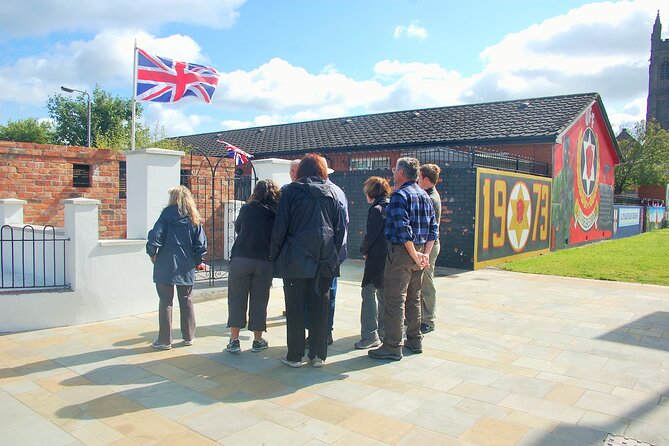
After the Falls Road and Republican sites, the taxi takes you into the Shankill area. This shift is essential. A tour that only shows one community would leave you with a partial picture of Belfast.
Shankill Road is divided into lower and upper sections and is described as one of Belfast’s oldest roads, dating back to 445 AD. It is also associated with the Ulster Volunteer Force and Ulster Freedom Fighters. Your guide explains the story from William of Orange through the present day, giving you a route into British and Loyalist identity.
The stop lasts about 15 minutes. If you visit near July, you might see one of the area’s large bonfires, which are tied to Loyalist tradition and commemoration. The timing is not guaranteed, and the tour should not be booked solely to see one, but the seasonal detail can add context if your visit happens to coincide with it.
The guide’s tone matters here. You should hear why some residents identify strongly with Britain, the Union flag, and Protestant traditions, while also learning about the violence linked with Loyalist paramilitary groups. This is not a stop for easy labels. It is a chance to see how memory and identity work on the other side of the dividing line.
Shankill murals and the final photographs
The final listed stop is Shankill Graveyard, where you have about 15 minutes to photograph Loyalist murals and images tied to British history. These murals form a useful counterpoint to the artwork on the Falls Road.
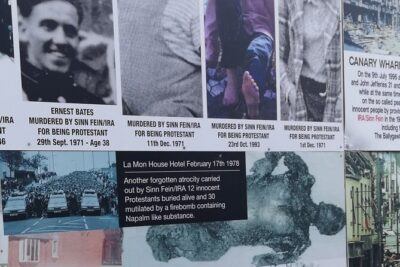
If you have already taken many pictures earlier, you may find the repeated mural format slightly tiring. Still, the comparison is the point. Look at the symbols, heroes, flags, dates, and words used in each area. You will see two communities using public walls to preserve memory and make political claims.
The tour ends back at the meeting point. That return is convenient, especially if you are staying near Belfast City Hall or have another city-center plan afterward.
What $178.26 per person really buys you
At $178.26 per person, this is not a budget sightseeing ride. Its value depends heavily on group size. For one or two people, the cost is high. For a small private group, the total becomes easier to justify because you are paying for a dedicated guide, a tailored conversation, and transport between sites rather than a basic hop-on, hop-off circuit.
You also avoid the tradeoff between a walking tour and a self-guided mural visit. A map can show you where the walls are, but it cannot explain why Bombay Street matters, how the hunger strike shaped politics, or why a peace wall still exists. The best part of the fee is the guide’s interpretation.
The tour has a five-star rating from 24 published assessments, with every published rating recommending it. The strongest praise focuses on detailed historical explanation, time for questions, and a nuanced account of current politics. That is encouraging, but I would still keep expectations realistic. The tour covers many locations in roughly two hours, so most stops are introductions rather than long visits.
Pickup, timing, and practical planning
Free pickup is available within 1 kilometer of Belfast City Hall. You can also meet at the front gates of City Hall. If you arrive by cruise ship, the shuttle bus drops you outside Visit Belfast, across from City Hall, which makes the meeting point relatively simple.
Cruise-port pickup is not included, and the operator says cruise-ship collection is not offered because the port is several miles outside the city center. Airport and train-station pickup also cost extra, with the surcharge paid in cash on the day. Confirm this before you set your schedule.
The activity is offered in English, includes a mobile ticket, and confirmation arrives at booking. It is near public transportation, and most people can take part. The private format means only your own group participates.
Book at least several weeks ahead if your dates are fixed. The average booking point is 18 days before the tour, which suggests that leaving it until the last minute may not be wise during busy periods.
Free cancellation is available up to 24 hours before the start time. Canceling later, or changing the booking within that 24-hour window, does not qualify for a refund.
Who will get the most from this Belfast tour
I would recommend this experience to you if you want a fast but serious introduction to the Troubles, especially if you have limited time in Belfast. It also suits anyone who wants to compare Republican and Loyalist areas in one outing rather than studying each side separately.
The tour works well for:
- First-time visitors who want political context before exploring Belfast alone
- Couples or small groups who prefer asking direct questions
- People who cannot manage long walks between neighborhoods
- Visitors interested in murals, peace walls, and modern Northern Irish politics
- Cruise passengers who can make their own way to Belfast City Hall
You might choose something else if you want a relaxed sightseeing ride with little discussion of violence or politics. You may also prefer a longer walking tour if you want to spend more time in each neighborhood or visit buildings rather than mainly viewing them from the taxi and at short stops.
Should you book the Express Terror and Peace tour?
Book it if your priority is understanding Belfast quickly, clearly, and from more than one community’s point of view. The Bobby Sands mural, International Mural Wall, Bombay Street, Clonard Monastery, peace wall, and Shankill murals create a strong route through the city’s recent past.
The price is the key question. I would book for a private group of several people, where the cost buys a personal guide and efficient transport. For a solo visitor, it is harder to call good value unless this subject is one of your main reasons for coming to Belfast.
Allow two hours rather than relying on the 90-minute title, meet near City Hall, and arrive ready to listen. If you want a thoughtful introduction to Belfast’s divided neighborhoods and the long road toward peace, this is a worthwhile choice.
FAQ
Where does the Belfast taxi tour begin?
The tour begins in Belfast, with free pickup within a 1-kilometer radius of Belfast City Hall. You can also meet at the front gates of City Hall.
Where does the tour end?
The activity ends back at the meeting point.
How long does the tour last?
The tour is advertised as 90 minutes, while the practical description gives an approximate duration of two hours. Confirm the expected timing when booking and allow about two hours.
Is the tour private?
Yes. Only your own group participates in the activity.
Is pickup available from Belfast airports, train stations, or cruise ports?
Pickup from airports, train stations, and cruise-ship ports is not included. A surcharge may be available for some locations and must be paid in cash on the day. Cruise-ship pickup is not offered because the port is several miles outside Belfast city center.
What language is the tour offered in?
The tour is offered in English.
Can children join the tour?
Yes, but children must be accompanied by an adult.
What is the cancellation policy?
You can cancel up to 24 hours before the experience starts for a full refund. Cancellations or changes made less than 24 hours before the start time are not accepted for a refund.
Just added in Belfast
- Falls road Murals Walking Tour with former prisoners★ 5.0 · 19 reviews
- Private Half Day Winter Magic in the Antrim Glens★ 5.0 · 2 reviews
- Belfast’s Titanic Quarter: A Self-Guided Audio Tour★ 5.0 · 6 reviews
- The Troubles and iconic award winning taxi 2hr private cab tour★ 5.0 · 28 reviews
- Titanic Eastside Bike Tour★ 5.0 · 9 reviews
- The Single Cask Whiskey Experience★ 5.0 · 6 reviews
- Titanic Maritime Walking Tour★ 5.0 · 23 reviews
- The Giants Causeway Tour★ 5.0 · 1 review
Belfast Black Taxi Tours, compared.
World Famous Belfast City Centre Black Cab/Taxi Tour 2 Hours
Read our review →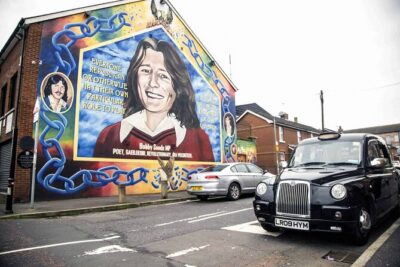
Black Taxi Tour and Crumlin Road Gaol tour Combo
Read our review →
Browse the lists this tour appears in