
Reviewed · BELFAST BLACK TAXI TOURS
Cab Tours Belfast Famous Black taxi tours 2 hrs The Troubles
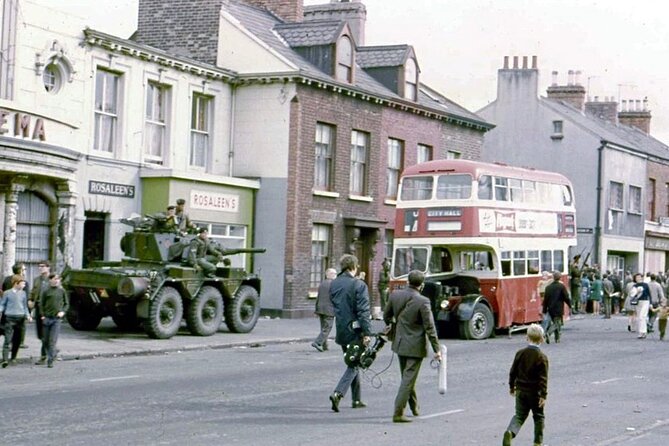
History here is painted on walls. Belfast’s famous black taxi tour takes you through Republican and loyalist neighborhoods, where murals, memorials, and personal stories explain the Troubles better than a museum label can. I especially like the private format, which lets you ask direct questions, and the fact that a black cab can connect scattered sites without wasting your short visit on buses or long walks. The main caution is that the subject is painful and politically charged, so the quality and balance of your driver matter greatly.
For about $116.54 per person, you get roughly two hours with your own group and an English-speaking local guide. Guides named Ricky, Kevin, Harry, David, Jim, Mall, and others have been praised for clear explanations and personal insight. Still, one serious complaint describes a late, smoke-smelling taxi and a failed pickup, so I would confirm the vehicle and meeting details before setting out.
In This Review
- Key things to know before booking
- Why a black taxi is the right way to see Belfast’s divided neighborhoods
- Falls Road and Bobby Sands: starting with the Republican story
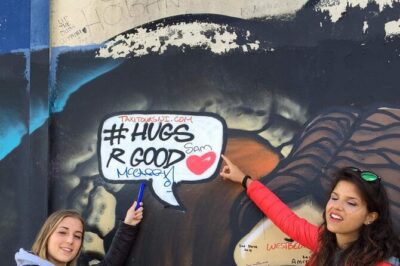
- The Peace Wall: writing your name on a difficult boundary
- Clonard Monastery: faith, shelter, and secret talks
- Shankill Road: seeing the loyalist side of Belfast
- Divis Street’s International Wall and today’s political messages
- What the personal guides add to the experience
- Is $116.54 per person good value?
- Pickup, timing, and the small details that matter
- Who should book this Belfast tour?
- Should you book the Belfast Famous Black Taxi Tour?
- FAQ
- How long does the Belfast black taxi tour last?
- How much does the tour cost?
- Is the tour private?
- Is pickup available?
- What language is the tour offered in?
- Can I cancel for a full refund?
Key things to know before booking
- Falls Road and Shankill Road tell opposing sides of the conflict, making this more than a quick mural tour.
- The Peace Wall allows you to add your name beside messages left by presidents and well-known public figures.
- Local guides give the tour its real value, with Ricky, Kevin, Harry, David, Jim, and Mall singled out for strong storytelling.
- A private black cab saves time while reaching neighborhoods that are spread across Belfast.
- The tour includes several photo stops, but admission tickets are not included where listed.
- Cruise passengers should arrange a central pickup, such as Belfast City Hall or a hotel within the free pickup zone.
Why a black taxi is the right way to see Belfast’s divided neighborhoods
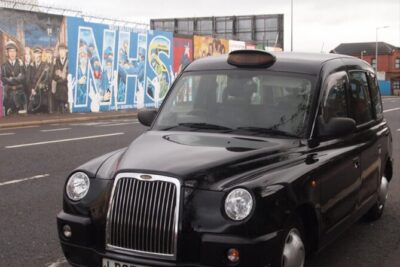
Belfast’s Troubles sites are not gathered in one compact historic center. The Falls Road, Shankill Road, Divis Street, Clonard, and the Peace Wall sit in different parts of the city. A private black cab takes you between them while your driver explains what you are seeing.
That matters in a two-hour tour. You are not simply looking at murals through a coach window, and you are not spending half the afternoon trying to connect neighborhoods by public transport. You can stop, get out, take photographs, and return to the cab before moving on.
The private setup is another strength. Only your group participates, so you can ask about a mural, a neighborhood, a family story, or a point of disagreement without worrying about holding up a large group. The tone may also feel more personal than a standard sightseeing bus.
The tradeoff is that the experience depends heavily on the individual guide. The strongest reports describe guides who explain the background clearly, answer questions, and add personal knowledge of Belfast during the conflict. That personal element can make the tour powerful. It can also make the experience uneven if the driver is rushed, partisan, or poorly prepared.
More black taxi tours in Belfast:
- Cab Tours Belfast Famous Black Taxi Tours
★ 5.0 · 3,633 reviews - Private Black Taxi Belfast City Tour
★ 5.0 · 2,188 reviews - Belfast’s Political Mural Taxi Tour
★ 5.0 · 1,180 reviews
Falls Road and Bobby Sands: starting with the Republican story
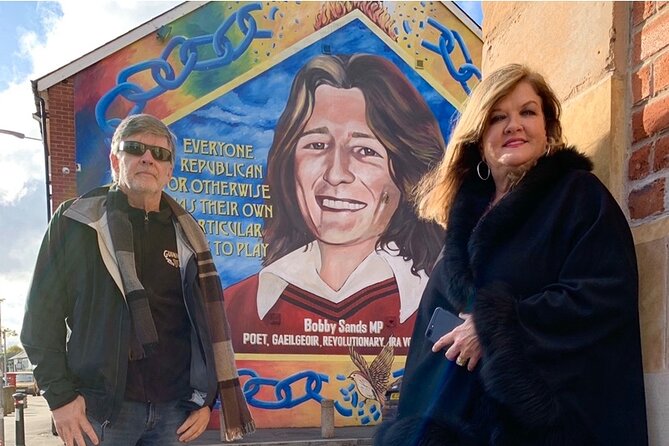
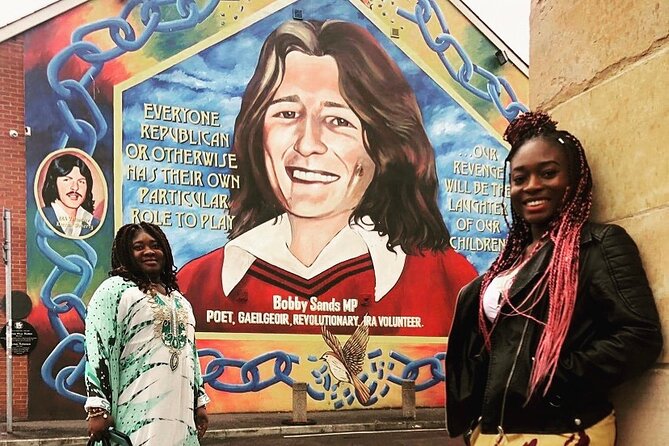
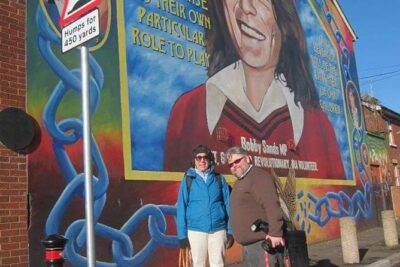
The tour visits the famous Bobby Sands mural on Falls Road, with time also spent around Bombay Street and other Republican memorials. This section introduces the political and social story of West Belfast through figures including Wolfe Tone, James Connolly, and Bobby Sands.
The guide explains the fight for equal rights, the rise of the Provisional IRA, and the hunger strikes of the 1980s. For many visitors, Bobby Sands is the name that gives the period a human face. His mural is not just a photo stop. It opens a discussion about imprisonment, protest, Irish nationalism, and the way memory is presented in public art.
Bombay Street is described as the birthplace of the Provisional IRA, and the tour connects the area with the wider Falls Road story. You should expect the guide to discuss the conflict through the Republican experience here, including the effect of the British Army withdrawal from bus service and the role of local drivers in keeping transport moving. The wording of the tour suggests that some of these stories are tied to the driver’s own experience and to colleagues who were killed.
The itinerary lists the Bobby Sands mural twice, with one entry also describing Falls Road as stretching several miles and containing murals, memorial gardens, and key Republican points. In practical terms, you should think of this as an extended Falls Road segment rather than two entirely separate attractions.
This is one of the tour’s most emotionally heavy sections. Go prepared to listen rather than treat the murals as simple street art. Photography is possible, but respectful behavior matters, especially around memorials and residential streets.
The Peace Wall: writing your name on a difficult boundary
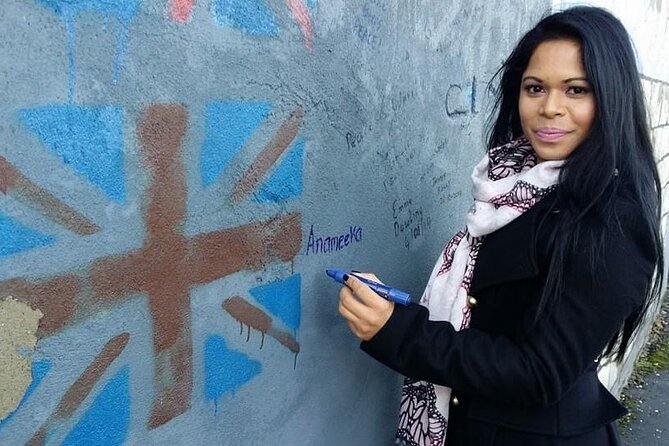
The Peace Wall is one of Belfast’s best-known symbols. The tour takes you to one of the large walls that still run through the city and gives you the chance to write your name beside messages left by presidents and famous public figures.
That small act can feel oddly cheerful beside such a serious structure. It also raises an important question: why does a city associated with peace still have walls dividing communities? The guide can help place the wall in the context of the conflict, the neighborhoods it separates, and the uneasy nature of post-conflict Belfast.
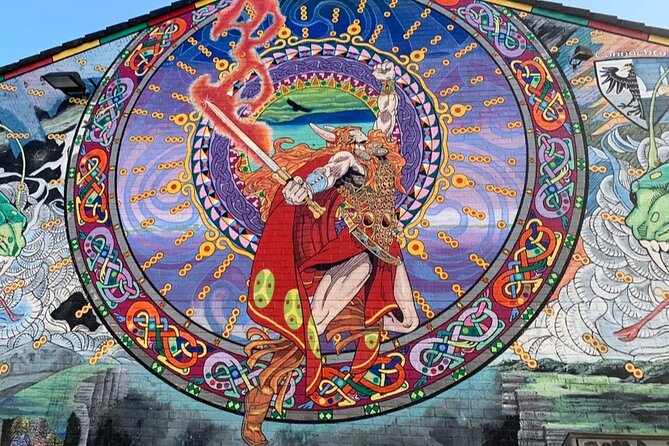
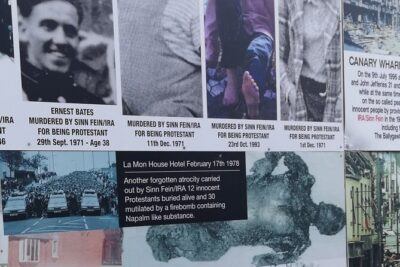
You will also see political murals in both Republican and loyalist districts. Many have been painted by local people over several decades. The murals preserve political memory, honor people who died, mark territory, and express views about national identity.
The practical advantage of visiting with a local cab driver is that you can see how the murals fit into ordinary streets rather than encountering them as isolated artwork. You are looking at homes, shops, churches, and community spaces as well as painted walls. That combination gives the tour more weight than a photo collection.
The wall is also one of the easiest places to take photographs. Keep in mind that the messages and murals are not neutral decorations. Some celebrate causes, organizations, or people connected to violence. Your guide’s explanation is essential if you want to understand what you are seeing.
Clonard Monastery: faith, shelter, and secret talks
Clonard Monastery provides a change of pace after the political murals. Built more than 100 years ago by local and Italian craftsmen, the monastery is connected to Belfast’s religious life and to the practical dangers of wartime. It was used as an air raid shelter during the Second World War.
The monastery also has a major place in the peace process. Father Alex Reid hosted secret talks there between Gerry Adams and John Hume. Those discussions helped create channels between people who represented very different political positions.
You may spend only around 10 minutes here, so do not expect a long interior visit or a full architectural tour. The value is the context. Clonard shows how a religious building could serve as a shelter, a meeting place, and a quiet setting for political contacts.
This stop is a good reminder that Belfast’s story is not only about walls and armed groups. Churches, clergy, workers, families, and local institutions all played roles during the conflict and in the movement toward peace.
More political history tours in Belfast:
- A History of Terror – Belfast City Centre Walking Tour
★ 5.0 · 2,883 reviews - Belfast Troubles Tour: Walls and Bridges
★ 5.0 · 853 reviews - Famous 1.5 hour Belfast Murals Tour
★ 5.0 · 477 reviews - Belfast Political Tour-Conflicting Stories Walking Tour
★ 4.5 · 459 reviews
Shankill Road: seeing the loyalist side of Belfast
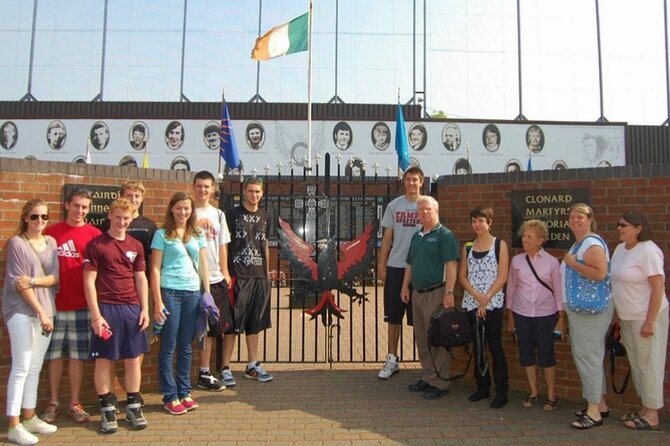
The visit to Shankill Road gives the tour a needed counterpoint to Falls Road. This is the heart of loyalist Belfast, associated with support for remaining part of the United Kingdom and with groups including the UVF and UFF.
Your guide explains how loyalists viewed the conflict and why many believed they were fighting to protect Ulster’s British identity. You will see loyalist murals and memorials, and you may hear local accounts of how residents experienced the violence and pressure of the period.
This is where the private format helps most. The subject can easily become a simple story of one side being right and the other being wrong. A good guide will explain how each community understood its own actions, fears, losses, and loyalties. Guides praised for giving clear perspective include Jim, Kevin, and Harry, while Ricky is repeatedly described as engaging and able to keep the story moving.
You should still listen critically. A driver with strong personal connections to the conflict may offer details unavailable in a textbook, but personal memory is not the same as a complete account. Ask questions. Notice which parts are presented as established fact and which parts are personal experience or community interpretation.
The Shankill segment lasts about 30 minutes, making it the longest listed stop. That gives you time to look at the area and ask about the murals rather than rushing through a single viewpoint.
Divis Street’s International Wall and today’s political messages
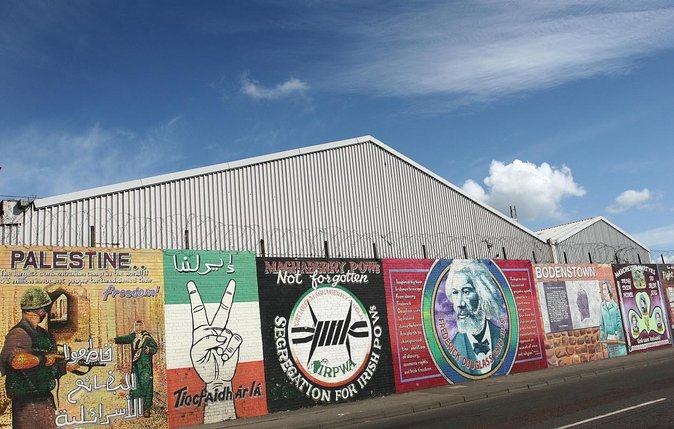
The International Mural Wall on Divis Street shows how Belfast’s public art has changed. The wall includes more than 40 murals supporting causes such as Black Lives Matter, Palestine, the Kurds, and Cuba. Local street artists have painted these works.
This stop links Belfast’s older political murals with international movements. It shows that the city’s tradition of using walls to express political identity did not end with the main years of the Troubles. The subjects have widened, but the basic idea remains familiar: public space becomes a place for protest, solidarity, and political education.
You will have around 20 minutes here. That should be enough to take photographs and ask what connects these causes to Belfast’s mural tradition. The International Wall also helps prevent the tour from becoming only a look backward. It shows that political expression continues in the city.
What the personal guides add to the experience
The most praised part of this tour is the guiding. Ricky is described as captivating and particularly strong at telling the story behind each stop. Kevin is praised for offering a clear, hopeful view of the conflict and its wider meaning. Harry is remembered for being friendly and well informed, while David is recommended for visitors with only one day in Belfast.
Mall is praised for combining facts and stories, and Jim for giving excellent perspective. These comments point to the main reason to choose a black cab tour rather than simply follow a mural map: you get a person who can connect separate places into a coherent account.
Some guides may have direct experience of the Troubles or know people affected by the violence. That can make the tour moving and immediate. It can also bring strong opinions. I would treat personal stories as valuable evidence of how the conflict felt, while still remembering that no single guide can represent every Belfast community.
The tour is offered in English. You should be comfortable following a detailed spoken explanation, since the guide’s commentary is the central feature rather than a minor addition between photo stops.
Is $116.54 per person good value?
At $116.54 per person, this is not the cheapest way to see murals in Belfast. If you are traveling alone, the price may feel steep for two hours. If you have a small private group, the calculation looks better because the cab, driver, and personal attention are shared among your party.
I think the price can be justified if you value context and convenience. You are covering several dispersed neighborhoods, receiving a private guide, and avoiding the time and uncertainty of navigating between the sites yourself. A self-guided walk costs less, but it cannot easily explain why a particular mural matters or how Falls Road and Shankill Road relate to each other.
The tour is also useful for a short Belfast visit. One review describes it as worthwhile even with only a single day in the city. That makes sense: in two hours, you can see major Troubles sites and reserve the rest of your day for City Hall, museums, food, or other parts of Belfast.
The value drops if you want a broad city tour, a long museum visit, or a gentle sightseeing ride. This experience is focused. Its subject is serious, political, and sometimes upsetting.
Pickup, timing, and the small details that matter
The tour lasts about two hours and offers pickup. Cruise passengers are advised to meet at a hotel or Belfast City Hall within the free pickup zone, which extends one kilometer from City Hall. If you are coming from a ship, do not assume the taxi will collect you directly at the dock. Confirm the exact meeting place before the day of the tour.
The activity is near public transport, and most people can participate. It is a private tour, so only your group rides together. Mobile tickets are accepted, and the tour is offered in English.
The operator normally provides confirmation at booking. The stated cancellation rule allows a full refund if you cancel at least 24 hours before the local start time. Changes or cancellations inside that 24-hour window are not accepted for a refund.
One service complaint deserves attention. A customer reported a late driver, a dirty back seat and floor, strong cigarette odor, confusion over the pickup time, and a driver who left after being asked for a different vehicle. The complaint is sharply different from the many positive accounts, but it is specific enough to take seriously. If a non-smoking cab is important to you, confirm that request in writing and check the vehicle when it arrives.
Who should book this Belfast tour?
I would choose this tour if you want to understand Belfast through the places where the conflict happened, rather than only hearing a general lecture. It suits first-time visitors, history-minded people, cruise passengers with limited time, and small groups who want to ask plenty of questions.
It is also a good fit if you want to see both Republican and loyalist areas. The combination of Falls Road, the Peace Wall, Clonard Monastery, Shankill Road, and Divis Street gives you a more balanced structure than a tour focused on one neighborhood.
I would hesitate if you dislike politically charged discussions or want a polished, neutral sightseeing experience. The tour deals with hunger strikes, paramilitary groups, killings, identity, and continuing division. It may leave you thoughtful, unsettled, or even emotional. That is not a flaw, but you should know what you are booking.
Should you book the Belfast Famous Black Taxi Tour?
Yes, if your main goal is to understand the Troubles in a short amount of time and you are willing to listen carefully. The private cab, strong local guides, and visits to both Falls Road and Shankill Road give the experience real value.
Book it with realistic expectations. This is not a light city tour, and two hours cannot explain every political detail. Request a non-smoking vehicle if needed, confirm the pickup point, and, if possible, ask for a guide known for clear and balanced storytelling. With those precautions, this is one of the most useful ways to begin making sense of Belfast’s divided past and unfinished peace.
FAQ
How long does the Belfast black taxi tour last?
The tour lasts approximately two hours.
How much does the tour cost?
The listed price is $116.54 per person.
Is the tour private?
Yes. Only your group participates in the private tour or activity.
Is pickup available?
Yes, pickup is offered. Cruise passengers are advised to meet at a hotel or Belfast City Hall within the free pickup zone, one kilometer from Belfast City Hall.
What language is the tour offered in?
The tour is offered in English.
Can I cancel for a full refund?
Yes, if you cancel at least 24 hours before the experience start time. Cancellations or changes made less than 24 hours before the start time are not accepted for a refund.
Just added in Belfast
- Falls road Murals Walking Tour with former prisoners★ 5.0 · 19 reviews
- Private Half Day Winter Magic in the Antrim Glens★ 5.0 · 2 reviews
- Belfast’s Titanic Quarter: A Self-Guided Audio Tour★ 5.0 · 6 reviews
- The Troubles and iconic award winning taxi 2hr private cab tour★ 5.0 · 28 reviews
- Titanic Maritime Walking Tour★ 5.0 · 23 reviews
- Titanic Eastside Bike Tour★ 5.0 · 9 reviews
- The Single Cask Whiskey Experience★ 5.0 · 6 reviews
- The Giants Causeway Tour★ 5.0 · 1 review
Belfast Black Taxi Tours, compared.
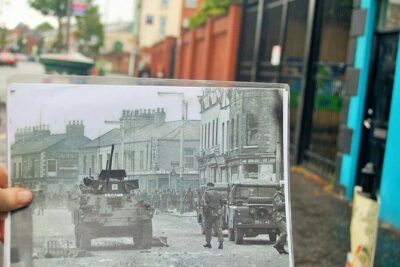
World Famous Belfast City Centre Black Cab/Taxi Tour 2 Hours
Read our review →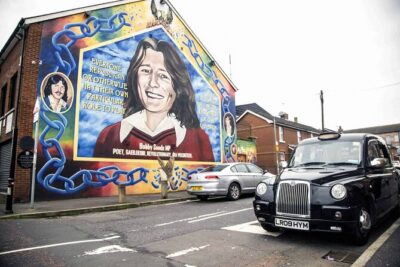
Black Taxi Tour and Crumlin Road Gaol tour Combo
Read our review →
Browse the lists this tour appears in