
Reviewed · BELFAST BLACK TAXI TOURS
2 Hour Terror and Mural History Belfast taxi Private Tour
Belfast’s walls still speak. This two-hour taxi tour takes you through West and North Belfast, where murals, memorials, churches, former security sites, and divided neighborhoods explain the Troubles in a direct, local way. I like the route because it includes both republican and loyalist areas, and I like that the guide can add personal insight rather than simply point out painted walls. The main drawback is the short schedule: nine stops in two hours means several visits are brief roadside explanations, not long walks or full museum visits.
The tour costs $190.59 per person, so its value depends on your interest in modern Irish history. For a first visit to Belfast, it covers a great deal quickly and includes pickup options near the city center. If you want time inside Crumlin Road Gaol, a slow look at every mural, or a relaxed coffee stop, you will need a separate visit.
In This Review
- Key points to know before booking
- Why this taxi tour helps explain Belfast
- The Peace Wall sets the tone
- Divis Flats and the story of Fort Apache
- Murals along Divis Street and Falls Road
- Clonard Monastery brings the peace process into view
- Crumlin Road Gaol in ten minutes
- Bombay Street and the origins of the Provisional IRA
- Shankill Road completes the picture
- Guide quality matters more than the car
- Pickup advice and practical value
- Who should book this Belfast tour?
- Should you book it?
- FAQ
- How long does the Belfast taxi tour last?
- Where does the tour start and finish?
- Can I be picked up from a cruise ship?
- Is the tour offered in English?
- Is admission included?
- What is the cancellation policy?
Key points to know before booking
- The route covers both sides of Belfast’s divide: You visit republican sites around Falls Road, then cross to loyalist Shankill Road.
- The Peace Walls are more than photo stops: Your guide explains why barriers were built and why some gates still close at night.
- Personal testimony may shape the tour: One guide connected with the experience was shot during the Troubles and gave an equal account of both communities.
- Nine stops fit into two hours: Expect a fast-moving taxi tour, with stops ranging from 10 to 20 minutes.
- Pickup has limits: City-center pickup is available within 1 kilometer of Belfast City Hall, but cruise-ship pickup is not offered.
- The route includes Clonard Monastery and its memorial garden: These stops add the peace process and the human cost of conflict to the political story.
Why this taxi tour helps explain Belfast
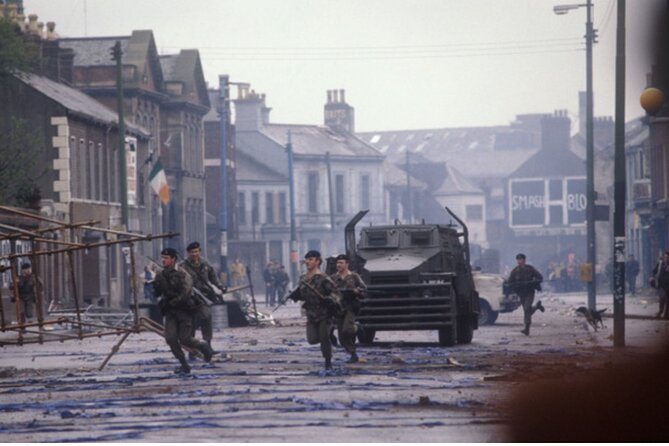
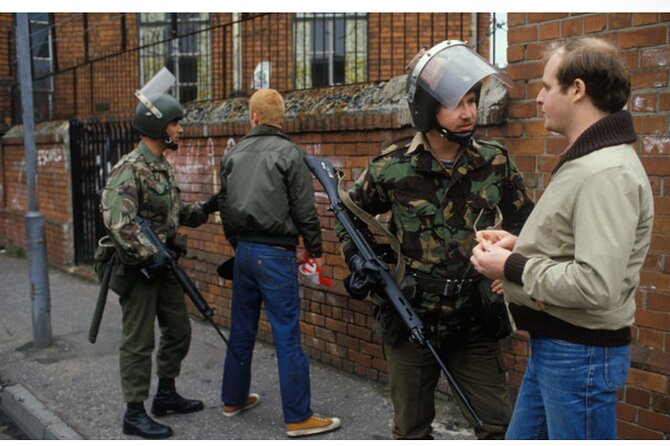
The Troubles can be difficult to understand from a standard city sightseeing bus. The conflict was not confined to one battlefield or one historic building. It shaped streets, housing estates, churches, schools, prisons, murals, and family memories.
This tour gives you a compact route through those places. You move from the Peace Wall to Divis, along Falls Road, past Clonard Monastery, and then toward Crumlin Road Gaol and Shankill Road. The order helps you see how local geography mattered. Protestant and Catholic districts were close together, yet separated by identity, politics, fear, and physical barriers.
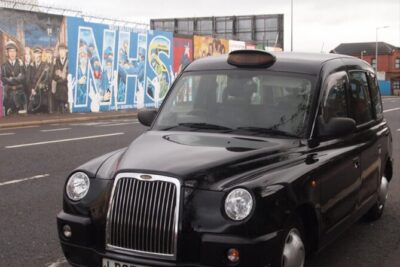
A taxi is useful here because the sites are spread across Belfast. You are not expected to work out several bus connections or walk long distances between neighborhoods. The driver can also explain what you are seeing as the vehicle moves between stops.
The format is best understood as a guided orientation, not a formal museum tour. You will see many important places, but most stops last only 10 to 20 minutes. That is enough for an explanation, photographs, and a brief look around. It is not enough for a detailed examination of every mural or a full visit to every building.
More black taxi tours in Belfast:
- Cab Tours Belfast Famous Black Taxi Tours
★ 5.0 · 3,633 reviews - Private Black Taxi Belfast City Tour
★ 5.0 · 2,188 reviews - Belfast’s Political Mural Taxi Tour
★ 5.0 · 1,180 reviews
The Peace Wall sets the tone
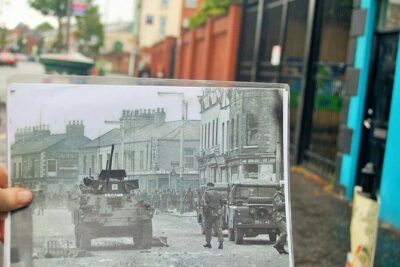
The first stop is the Peace Wall, with about 20 minutes allotted. These barriers were built during the late 1960s as sectarian violence grew. Their purpose was to separate mainly Protestant and Catholic neighborhoods and reduce attacks across the divide.
The walls are physical reminders that peace did not arrive through one grand moment. Some barriers stretch for miles, and gates in certain places still close at night. Murals and graffiti add layers of political feeling, grief, humor, anger, and hope.
I like beginning here because it gives you the basic question for the rest of the tour: how can a city live with barriers built for safety that also preserve separation? Your guide can explain the local meaning of the artwork and the community effort behind later moves toward reconciliation.
Allow time for the fact that this is an active neighborhood, not a theme park. You may see memorial writing or political imagery that feels blunt. That is part of the value, but it can also make the stop emotionally heavy.
Divis Flats and the story of Fort Apache
Divis Flats receives about 10 minutes. Built in the late 1960s, the high-rise complex became a major site of tension in predominantly Catholic West Belfast.
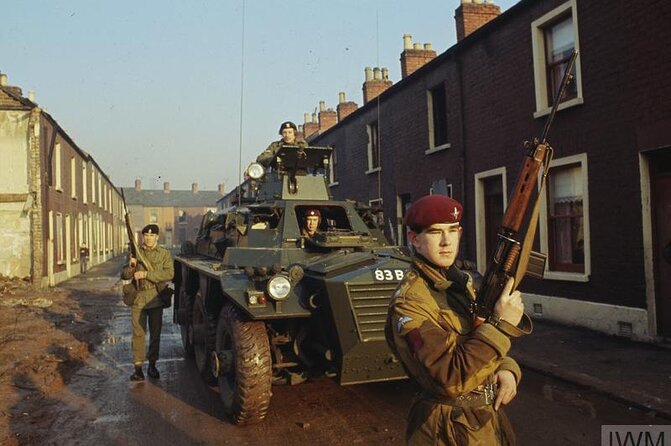
A British Army base was placed on the roof of the tallest building. Locals called it Fort Apache. From there, soldiers had a strategic view over the surrounding area. For residents, the base also represented surveillance and military pressure inside a place where they lived.
This is a short stop, so do not expect an extended walk through the flats. The value comes from the guide’s explanation of how ordinary housing became part of the conflict. Divis helps you see that the Troubles were not only about speeches and armed groups. They were also about daily life under watch, restricted movement, and constant suspicion.
If you have studied the conflict already, this stop may feel familiar. If you are new to Belfast, it adds useful scale to the story before the mural stops begin.
Murals along Divis Street and Falls Road
The International Mural Wall on Divis Street gets about 10 minutes. Its artwork changes over time and addresses both local events and international causes. Themes include human rights, resistance, peace, and solidarity with struggles beyond Northern Ireland.
This is one of the tour’s best places to ask questions. A mural can look like simple street art if you do not know the people, dates, flags, or symbols shown. The guide’s explanation turns painted walls into a political record.
The short timing is the limitation. You will not have time to study every panel. If a particular mural interests you, note its location and return later on foot. The tour gives you the framework, while a second visit lets you look more closely.
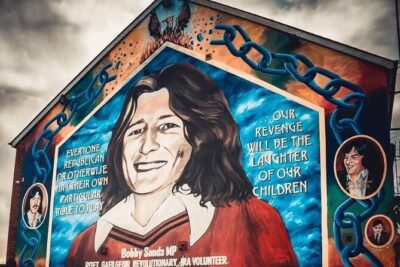
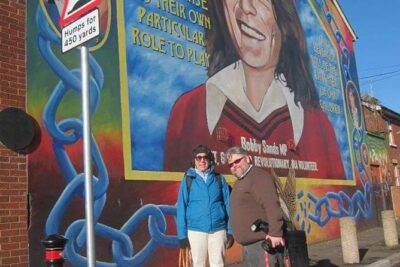
The Bobby Sands mural follows, with another 10-minute stop. Sands was a Provisional IRA member who died during the 1981 hunger strike. During the strike, he was elected as a Member of Parliament, which made his death an international political event as well as a local one.
The mural is one of the best-known republican images in Belfast. It reflects how Sands became a symbol of Irish republican resistance and the demand for political recognition. It also opens a difficult discussion about the difference between calling someone a freedom fighter, a political prisoner, or a paramilitary member.
A good guide should give you the facts and explain why the image matters to the community without pretending that the subject is simple. This is a place to listen carefully and avoid reducing the conflict to heroes on one side and villains on the other.
More political history tours in Belfast:
- A History of Terror – Belfast City Centre Walking Tour
★ 5.0 · 2,883 reviews - Belfast Troubles Tour: Walls and Bridges
★ 5.0 · 853 reviews - Famous 1.5 hour Belfast Murals Tour
★ 5.0 · 477 reviews - Belfast Political Tour-Conflicting Stories Walking Tour
★ 4.5 · 459 reviews
Clonard Monastery brings the peace process into view
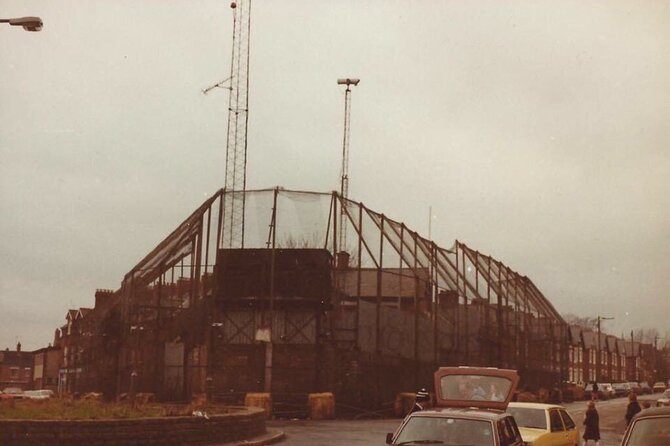
Clonard Monastery receives about 10 minutes. The red-brick church was founded in 1896 and became important during the Troubles because Catholic priests, especially Father Alec Reid, helped open communication between enemies.
Father Reid’s behind-the-scenes mediation contributed to discussions that eventually led to the Good Friday Agreement in 1998. You do not need to be religious to appreciate the importance of this stop. It shows that negotiations often begin quietly, through people willing to speak to those whom others refuse to meet.
The monastery also changes the pace of the tour. After walls, military tension, paramilitary history, and political murals, this is a place connected with dialogue and reconciliation. You may have only a short time to view the church and its surroundings, but the guide’s context makes the visit worthwhile.
Next door, the Clonard Martyrs Memorial Garden receives about 15 minutes. Plaques and memorials honor people from the local community who died during the Troubles. The garden offers a quieter setting for considering the personal cost of the conflict.
This stop is important because political history can become too abstract. Names on a memorial bring the story back to families and neighbors. The garden also shows that different communities remember loss in different ways. You may find the republican language of remembrance more direct here than in a general city museum.
Crumlin Road Gaol in ten minutes
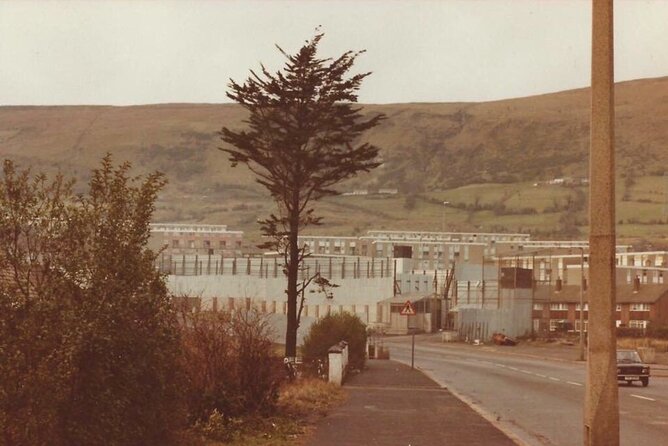
Crumlin Road Gaol and the former courthouse are among Belfast’s most recognizable conflict sites. The prison was built in the 19th century and held both ordinary criminals and political prisoners, including IRA and loyalist members.
The prison became known for escapes, hunger strikes, riots, and the strain between prisoners and authorities. The tunnel linking the gaol with the courthouse is a reminder of how directly prisoners were taken from confinement to trial.
The tour allows about 10 minutes here, and admission is listed as free for this stop. That timing suggests a brief exterior visit and explanation rather than the full guided prison experience offered separately at the restored gaol.
I would not book this taxi tour as a substitute for a dedicated Crumlin Road Gaol visit. I would book it because the gaol fits neatly into the wider story. You see how imprisonment and court proceedings formed another part of the conflict, then move on before one site takes over the whole afternoon.
Bombay Street and the origins of the Provisional IRA
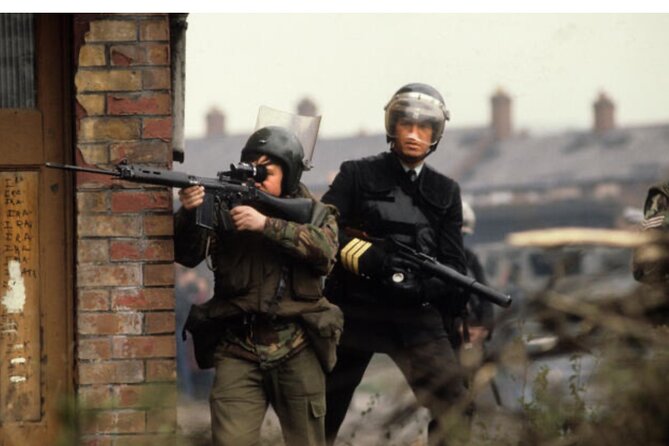
The Belfast Peace Lines stop includes Bombay Street and lasts about 15 minutes. In August 1969, sectarian riots led to the destruction of homes on Bombay Street and displaced many Catholic families.
Those attacks helped create the conditions for the Provisional Irish Republican Army. A faction broke away from earlier IRA structures, arguing that nationalist communities needed stronger protection and pursuing Irish reunification through armed resistance.
This is a crucial stop, but it requires care. The formation of the Provisional IRA did not happen in isolation, and the group’s later campaign caused great suffering as well as gaining support in some nationalist areas. A balanced explanation should hold both facts together.
Bombay Street also gives you a direct sense of community resilience. Memorials and restored homes recall the destruction without turning the place into a display. You are looking at a lived-in neighborhood shaped by events that still affect political identity.
Shankill Road completes the picture
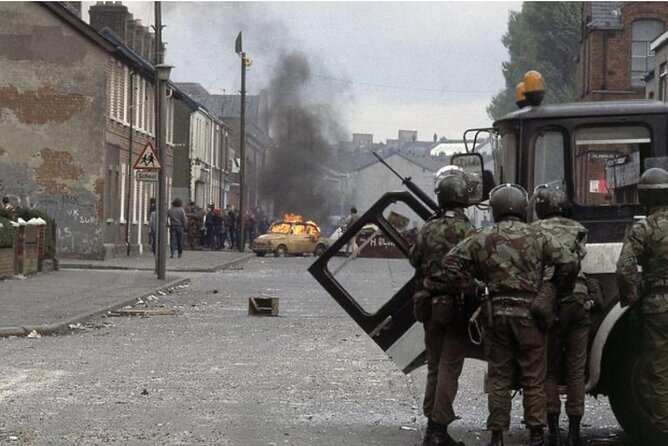
The final stop is Shankill Road, with about 20 minutes. This predominantly loyalist area provides the republican side of the route with a necessary counterpart.
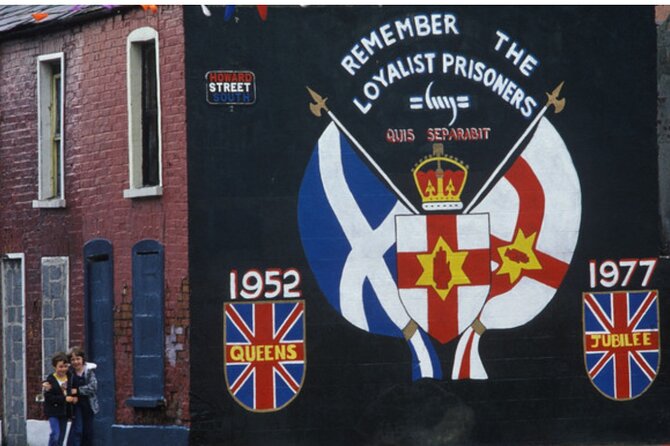
Shankill murals recall the Ulster Volunteer Force, the Ulster Freedom Fighters, and the wider loyalist goal of keeping Northern Ireland within the United Kingdom. The imagery can include uniforms, emblems, memorials, and references to people and events important to the loyalist community.
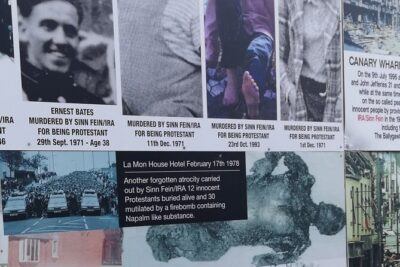
The stop matters because Belfast makes little sense if you see only Falls Road. Shankill Road shows how loyalist communities understood the conflict, why union with Britain mattered to them, and how paramilitary organizations developed in response to republican violence and political change.
You may find the murals confronting. That is not a reason to skip them. It is a reason to let the guide provide context and to avoid treating one district’s memorials as the complete story.
The 20-minute allowance is longer than at most stops, which helps. Still, this is not a full walking tour of Shankill Road. It is a concise introduction before the taxi returns to the meeting point.
Guide quality matters more than the car
The strongest praise for this experience centers on the guide’s timing, clear facts, and balanced presentation. One guide connected with the tour had personally been shot during the Troubles. If you receive that guide, the tour may include firsthand knowledge that no printed description can provide.
That personal connection can make the past feel close, but it also raises the need for care. A guide’s experience shapes the story, so ask questions and listen for the distinction between personal memory, community belief, and established historical fact.
The vehicle itself is described as clean, and punctual arrival is important on a two-hour route. Since the stops are tightly timed, even a late start could reduce time at the final locations. The maximum group size is listed as 25, so confirm the exact vehicle arrangement if you are expecting a truly private taxi for only your party.
English is the offered language. A mobile ticket is provided, parking fees are included, and coffee, tea, and alcoholic drinks are not included. Most people can take part, and service animals are allowed.
Pickup advice and practical value
The stated starting point is the Leonardo Hotel Belfast on Great Victoria Street. The activity ends back at the meeting point.
Free pickup is available within 1 kilometer of Belfast City Hall. You can also arrange collection at the front gates of City Hall. Cruise-ship pickup is not offered because the port is several miles outside central Belfast, but the cruise shuttle bus drops passengers near Visit Belfast, across from City Hall.
That detail matters if you are arriving by ship. You will need to make your own way from the port to the city-center pickup point, so allow time for the shuttle and meeting arrangements.
At $190.59 per person, the price is high for a two-hour outing. The value improves if you have limited time, want transport between districts, and would otherwise pay for a separate taxi plus a guide. It is less appealing if you are staying several days and can visit the Peace Wall, Falls Road, and Shankill Road independently.
The main purchase is not admission. Most stops are free, and parking fees are included. You are paying for the route, the interpretation, the local perspective, and the ability to cover both sides of the city without handling the transport yourself.
The tour is typically booked well ahead, with an average booking time of about 40 days. That suggests you should reserve early if your Belfast dates are fixed.
Who should book this Belfast tour?
I would recommend it to you if you want a fast but serious introduction to the Troubles. It suits first-time visitors, history students, people working on modern politics, and anyone who wants to understand why Belfast’s neighborhoods still carry such clear identities.
It also works well for a short city break. In two hours, you get a useful map of places to revisit on foot, including the Peace Wall, International Wall, Bobby Sands mural, Clonard Monastery, and Shankill Road.
I would be more cautious if you want a gentle sightseeing outing. The subject includes shootings, hunger strikes, sectarian attacks, imprisonment, and deaths within local communities. The route can be emotionally demanding, and the short stops may feel rushed to anyone who prefers slow photography or long museum visits.
Should you book it?
Book this taxi tour if your priority is context, local history, and efficient transport. Its greatest strength is the balance of republican and loyalist sites, supported by guides who can explain the human side of the conflict.
Skip it if you want a full visit inside Crumlin Road Gaol or a leisurely mural walk. For most first visits, though, this is a strong two-hour introduction to Belfast’s divided past and ongoing movement toward peace.
Free cancellation is available if you cancel at least 24 hours before the start time. Changes or cancellations made within 24 hours are not accepted for a refund.
FAQ
How long does the Belfast taxi tour last?
The tour lasts approximately two hours. The scheduled stops add up to about 120 minutes, including time at the Peace Wall, Divis, the mural sites, Clonard, Crumlin Road Gaol, Bombay Street, and Shankill Road.
Where does the tour start and finish?
The listed meeting point is the Leonardo Hotel Belfast on Great Victoria Street. The activity ends back at the meeting point.
Can I be picked up from a cruise ship?
No. Cruise-ship pickup is not offered because the port is several miles outside Belfast city center. You can take the cruise shuttle to Visit Belfast, across from City Hall, and arrange pickup at the front gates of Belfast City Hall.
Is the tour offered in English?
Yes. English is the listed tour language.
Is admission included?
Admission is included for the Peace Wall stop. The other listed stops have no admission charge for this experience. Coffee, tea, and alcoholic beverages are not included, while parking fees are included.
What is the cancellation policy?
You can cancel for a full refund up to 24 hours before the experience starts. Cancellations or changes made less than 24 hours before the start time are not accepted for a refund.
More History Tours in Belfast
- Giants Causeway & Castles Tour from Belfast: Guided tour
★ 5.0 · 1,432 reviews - Giants Causeway, Rope Bridge, Carrickfergus Castle and Dark Hedges Tour
★ 4.0 · 596 reviews - Giant’s Causeway Tour from Belfast – Luxury Bus + Castles Tour
★ 4.5 · 372 reviews - From Belfast-Giants Causeway, Dunluce Castle and Dark Hedges tour
★ 4.5 · 193 reviews
Just added in Belfast
- Falls road Murals Walking Tour with former prisoners★ 5.0 · 19 reviews
- Private Half Day Winter Magic in the Antrim Glens★ 5.0 · 2 reviews
- Belfast’s Titanic Quarter: A Self-Guided Audio Tour★ 5.0 · 6 reviews
- The Troubles and iconic award winning taxi 2hr private cab tour★ 5.0 · 28 reviews
- The Single Cask Whiskey Experience★ 5.0 · 6 reviews
- Titanic Maritime Walking Tour★ 5.0 · 23 reviews
- Titanic Eastside Bike Tour★ 5.0 · 9 reviews
- The Giants Causeway Tour★ 5.0 · 1 review
Belfast Black Taxi Tours, compared.

World Famous Belfast City Centre Black Cab/Taxi Tour 2 Hours
Read our review →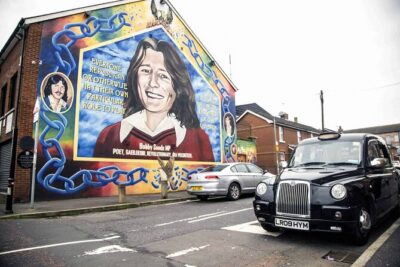
Black Taxi Tour and Crumlin Road Gaol tour Combo
Read our review →
Browse the lists this tour appears in